Discover Asuka-Fujiwara, Japan’s New World Heritage Site and the Ancient Birthplace of Japan, Older Than Kyoto
Oct 15, 2026
Discover Asuka-Fujiwara, Japan’s New World Heritage Site and the Ancient Birthplace of Japan, Older Than Kyoto
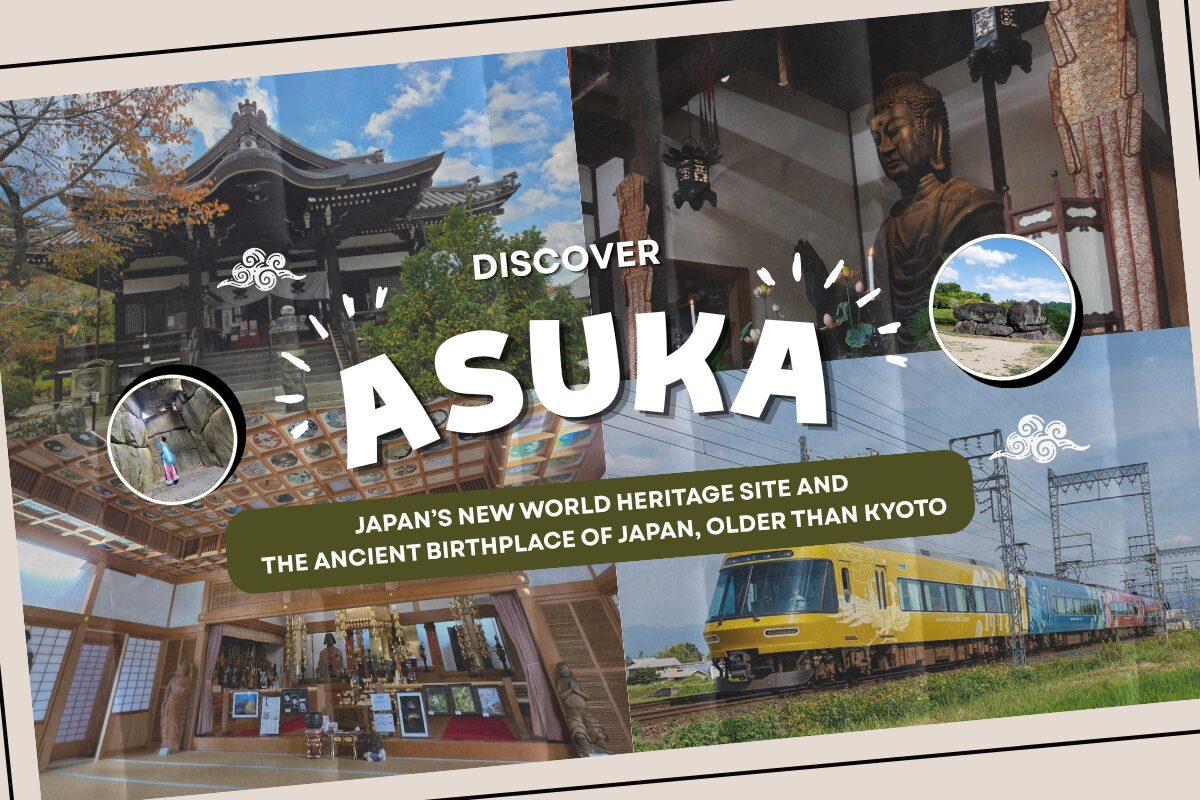
When thinking of Japan’s ancient cities, Kyoto and Nara are often the first places that come to mind. However, long before these cities rose to prominence, Asuka-Fujiwara served as Japan’s capital and administrative center.
On July 26, 2026, Asuka-Fujiwara was officially inscribed as a UNESCO World Heritage Site, further highlighting its historical significance.
In other words, if you’re looking for a peaceful destination away from the crowds, why not step off the well-trodden tourist path and travel back in time to discover the fascinating history of Japan’s early days? Asuka-Fujiwara is certainly a destination worth adding to your list.
Now, let’s take a closer look at what makes Asuka-Fujiwara so special.
Index
- How to Get There
- Step Back More Than 1,300 Years to When Asuka Was the Heart of Japan
- 4 Must-Visit Sites in Asuka-Fujiwara
- Dress in Period Costume: Channel the Spirit of Ancient Japan and Explore Asuka
- Ride the “Shijin Liner”: The Only Limited Express Train from Osaka to Asuka
How to Get There
Traveling to the Asuka-Fujiwara area is easy and convenient by Kintetsu Railway. Here are the recommended routes from Nara, Kyoto, and Osaka
- From Nara
Take the Kintetsu-Nara Line from Kintetsu-Nara Station to Yamato-Saidaiji Station (approximately 5 minutes). Then, transfer to the Kintetsu-Kashihara Line and continue to Kashiharajingu-mae Station (approximately 30–40 minutes). From there, transfer to the Kintetsu-Yoshino Line and get off at Asuka Station.
- From Kyoto
Take the Kintetsu-Kyoto Line from Kintetsu-Kyoto Station to Kashiharajingu-mae Station (approx. 1 hour 30 minutes). Then, transfer to the Kintetsu-Yoshino Line and get off at Asuka Station.
- From Osaka
Take a Kintetsu Limited Express or Express train on the Kintetsu Minami-Osaka Line from Osaka-Abenobashi Station directly to Kashiharajingu-mae Station or Asuka Station (approx. 40–50 minutes), with no transfers required.
Step Back More Than 1,300 Years to When Asuka Was the Heart of Japan
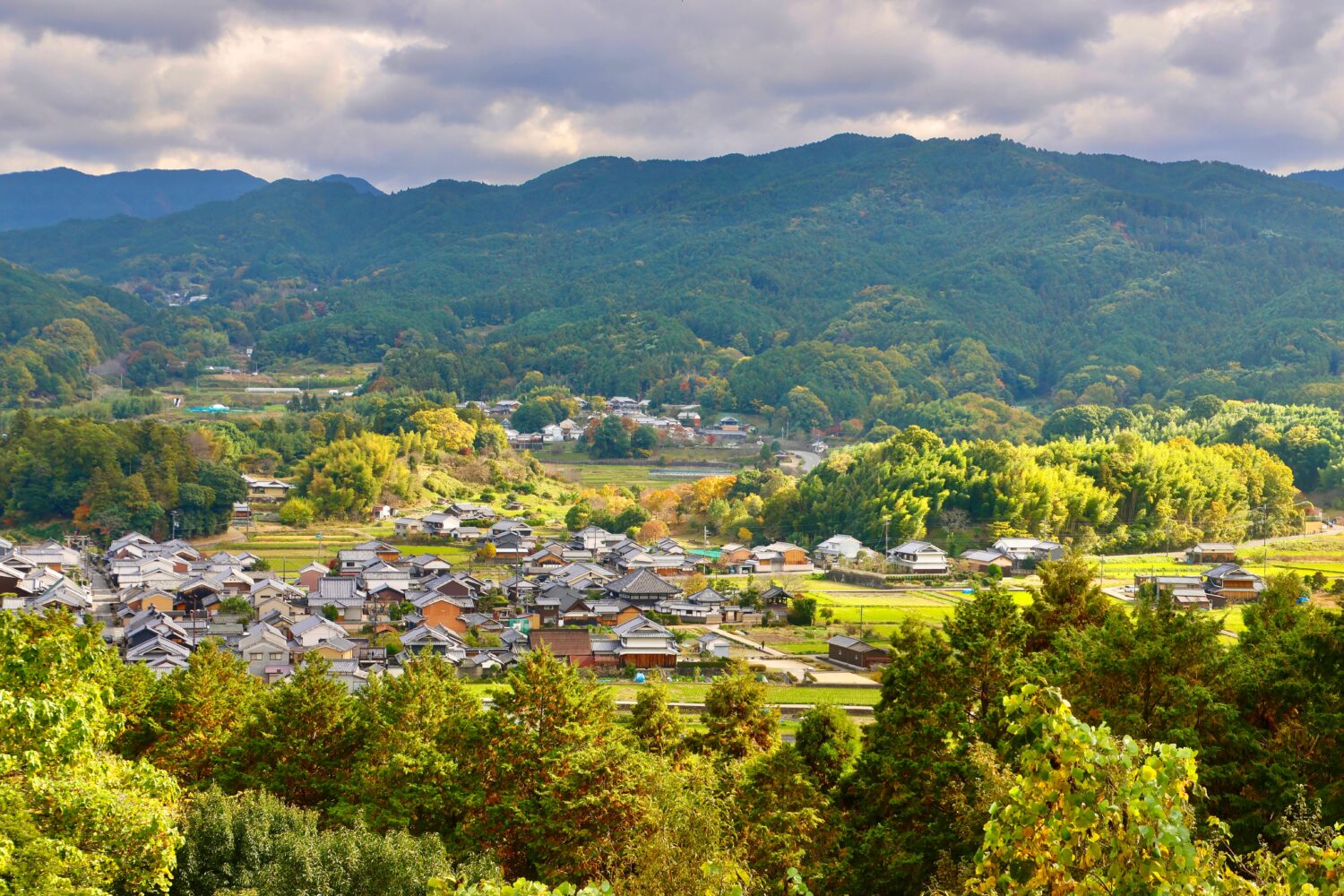
The Asuka-Fujiwara area is not a single town or city, but rather a historic region that spans the present-day areas of Kashihara, Sakurai, and Asuka Village in Nara Prefecture. Located in the southern part of the Nara Basin, the Asuka area was once a small basin surrounded by hills, while the Fujiwara area lies on the plains to the northwest of Asuka.
Today, the area is largely rural, with rice fields stretching across the landscape and mountains forming a scenic backdrop. Yet beneath this peaceful countryside lies a rich history, with traces of ancient palaces, temples, gardens, tombs, and ritual sites dating back more than 1,300 years.
So, why is Asuka referred to as the “birthplace of Japan”?
The key reason lies in the period from approximately 592 to 710 AD, when the Asuka-Fujiwara region served as a political center and was home to Japan’s capital, before the capital was relocated to Heijo-kyo (present-day Nara) in 710 AD.
This period lasted for approximately 120 years and is known as the Asuka Period. This is why Asuka has a history that predates the other capitals of Japan that came later.
This period was also a time of significant change for Japan, as it adopted and integrated knowledge, technology, culture, and administrative systems from China and the Korean Peninsula with its own traditional culture. From Buddhism and temples to systems of government and urban planning, traces of these influences can still be seen throughout the Asuka-Fujiwara region today.
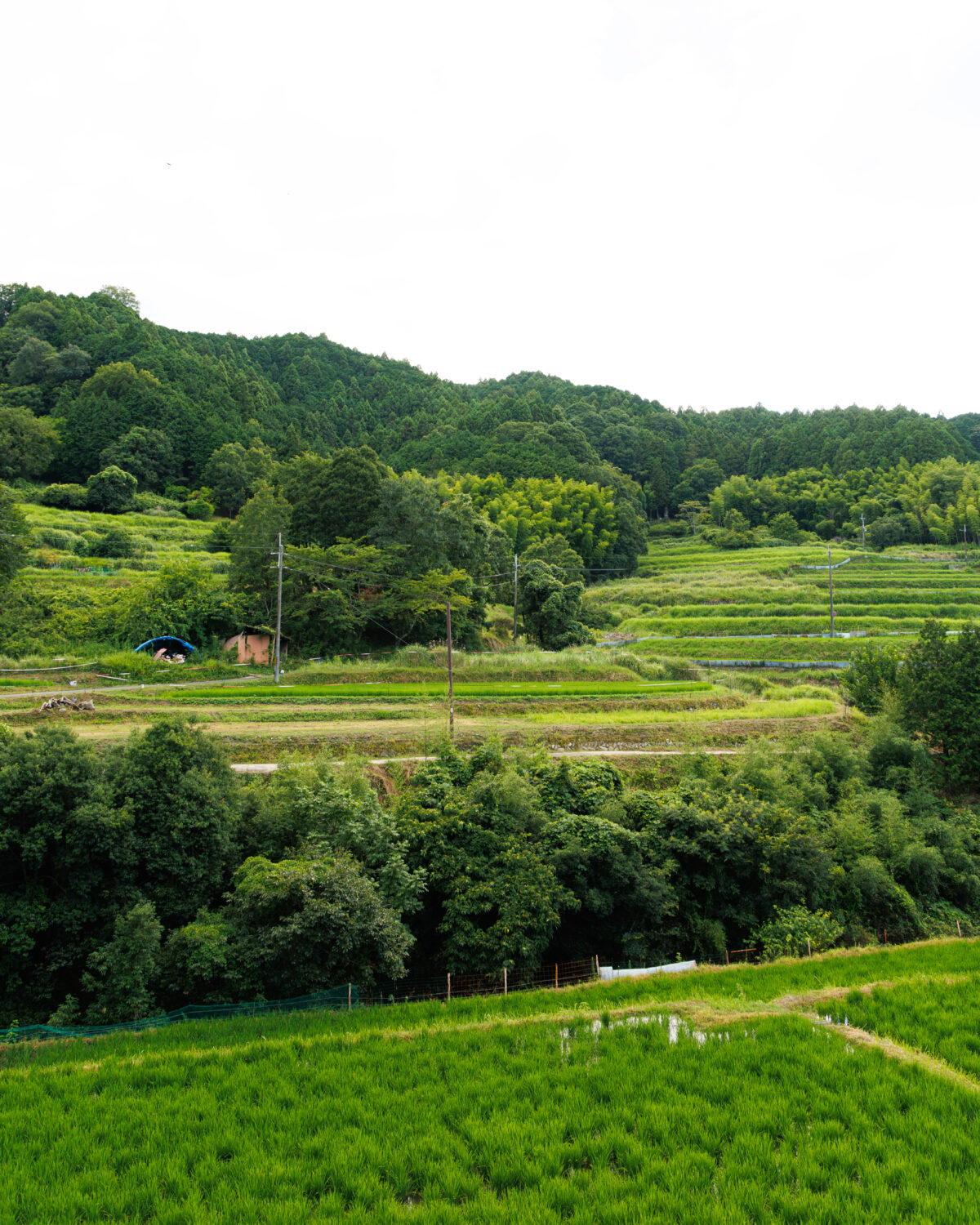
Therefore, visiting this place is not just about exploring ancient ruins; it is like stepping back in time to an era when Japan was laying the foundations of the nation.
By this point, you should have gotten to know Asuka-Fujiwara fairly well. So, let’s take a look at some of the interesting places to visit in the area.
4 Must-Visit Sites in Asuka-Fujiwara
-
- Asuka-dera Temple
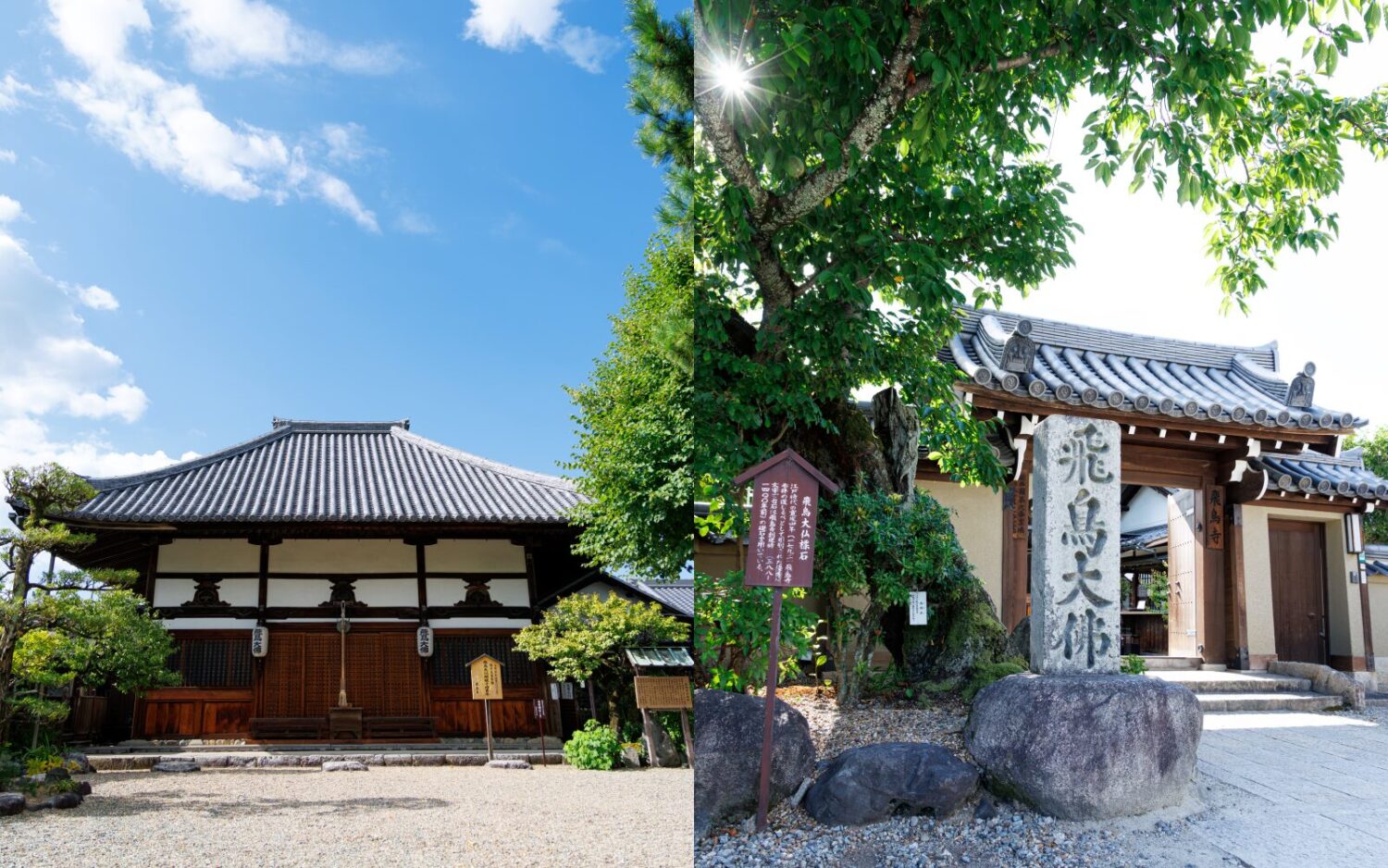
Let’s begin with Asuka-dera Temple (飛鳥寺), one of the important sites that reflects the arrival of Buddhism in Japan. It is also one of the oldest temples built during the Asuka Period. Its construction incorporated building techniques and cultural influences from the Asian mainland.
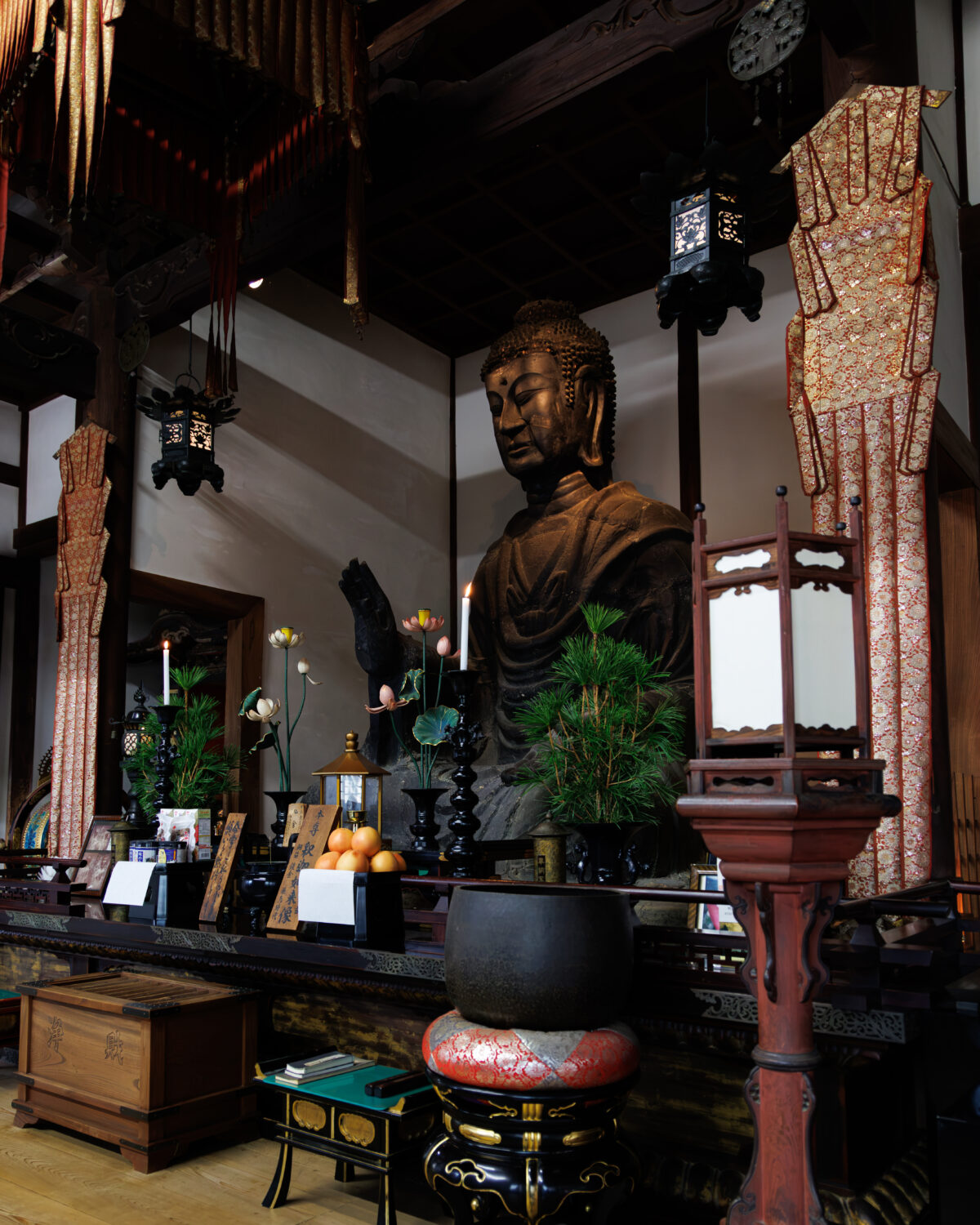
If you have a chance to explore the temple grounds, you can see traces of a time when Japan was embracing new cultures and undergoing changes, as well as the beautiful and intricate blending of different cultural influences.
More about Asuka-dera Temple
Address
- 682 Asuka, Takaichi District, Nara 634-0103, Japan
Tel.
- 081744542126
Opening Hours
- Everyday 09:00 A.M – 05:30 P.M (From October to March, the hours are 09:00 A.M. – 05:00 P.M.)
How to Get There
- From Kashiharajingu-mae Station, take a Nara Kotsu bus to Asukadaibutsu-mae Bus Stop, then walk for about 1 minute.
Map
*.。.*゚*.。.*゚*
-
- Tachibana-dera Temple
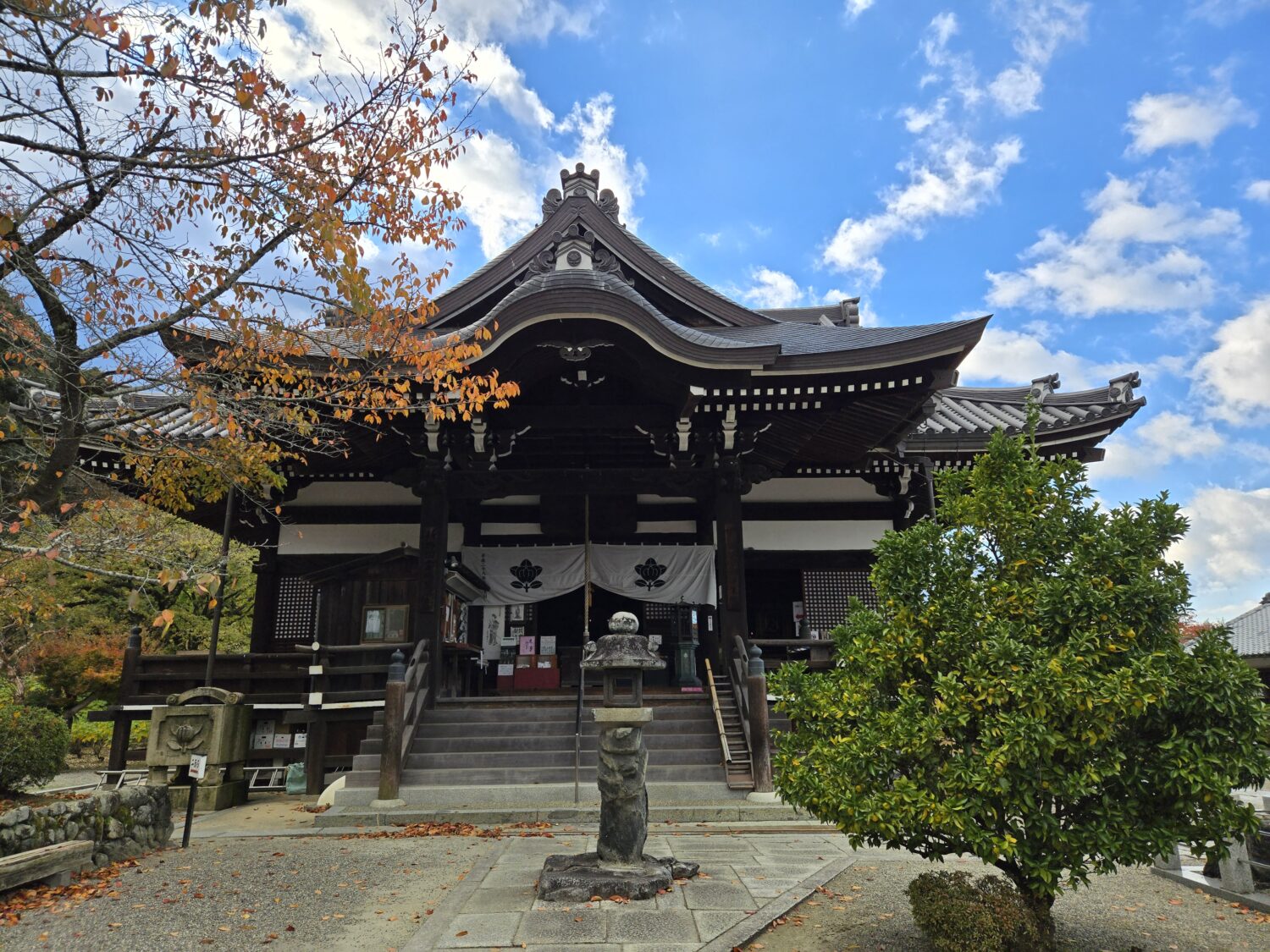
Another important temple in Asuka is Tachibana-dera Temple (橘寺), one of the sites that reflects the spread of Buddhism during the Asuka Period. The temple is part of a group of ancient sites that has been designated as a World Heritage Site. Therefore, visiting this temple is like following the history of Japan during its early state-building period.
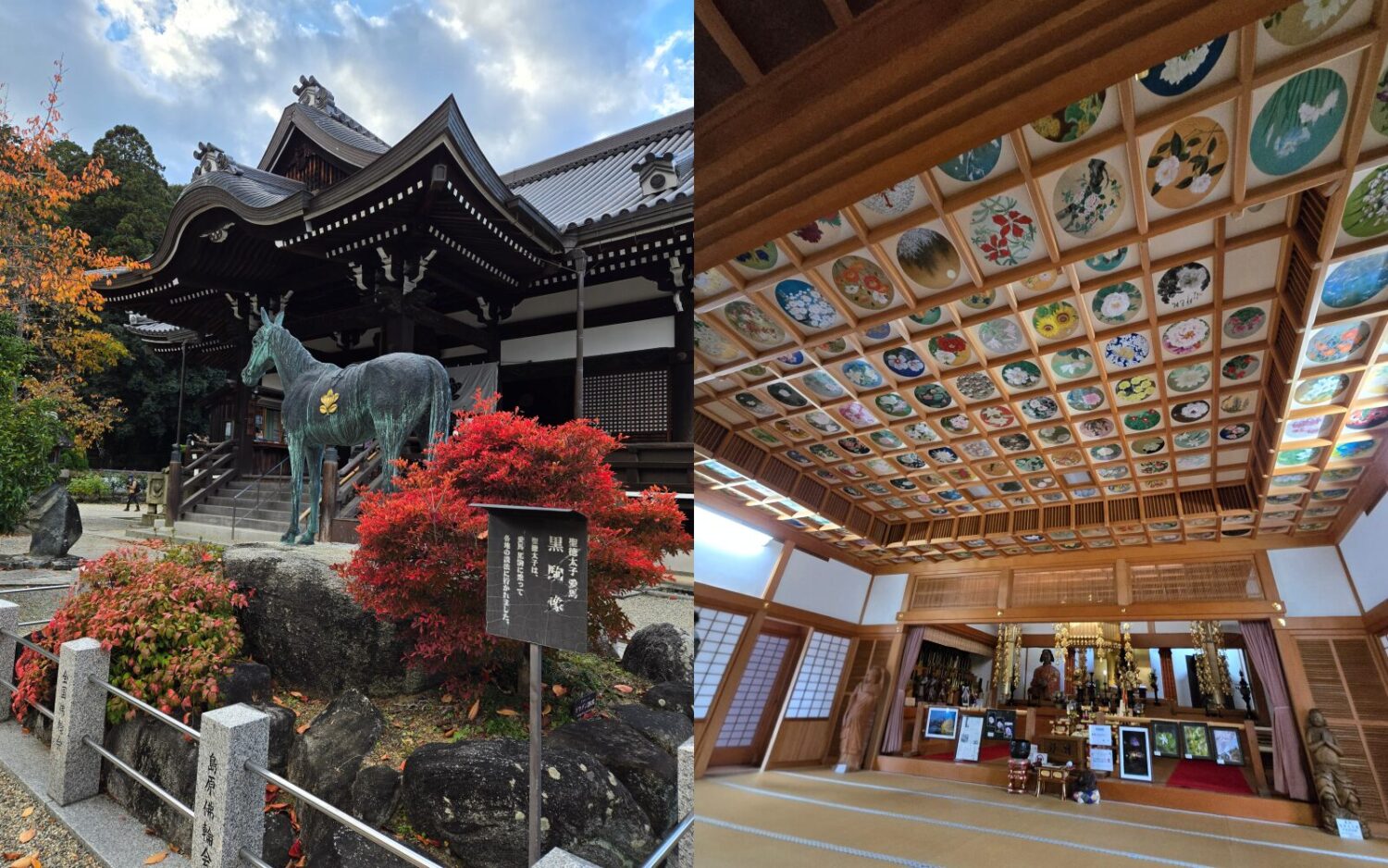
The temple has an ancient and solemn atmosphere, with an indescribable charm. Another highlight not to be missed is the beautiful flower paintings on the ceiling of the Ojouin (往上院) building. Each section of the Gotenjou (格天井), a traditional Japanese coffered ceiling, is decorated with paintings of seasonal flowers that were presented by artists to the temple. There are as many as 260 paintings in total!
We recommend taking your time to stroll around and admire them. It will certainly be worth your time.
More about Tachibana-dera Temple
Address
- 532 Tachibana, Asuka, Takaichi District, Nara 634-0142, Japan
Tel.
- 081744542026
Opening Hours
- Everyday 09.00 A.M – 05.00 P.M
How to Get There
- From Asuka Station or Kashiharajingu-mae Station, take the local Asuka Loop Bus or a Nara Kotsu bus to Okahashimoto Bus Stop or Kawahara Bus Stop, then walk for about 3 minutes
Map
*.。.*゚*.。.*゚*
-
- Ishibutai Kofun
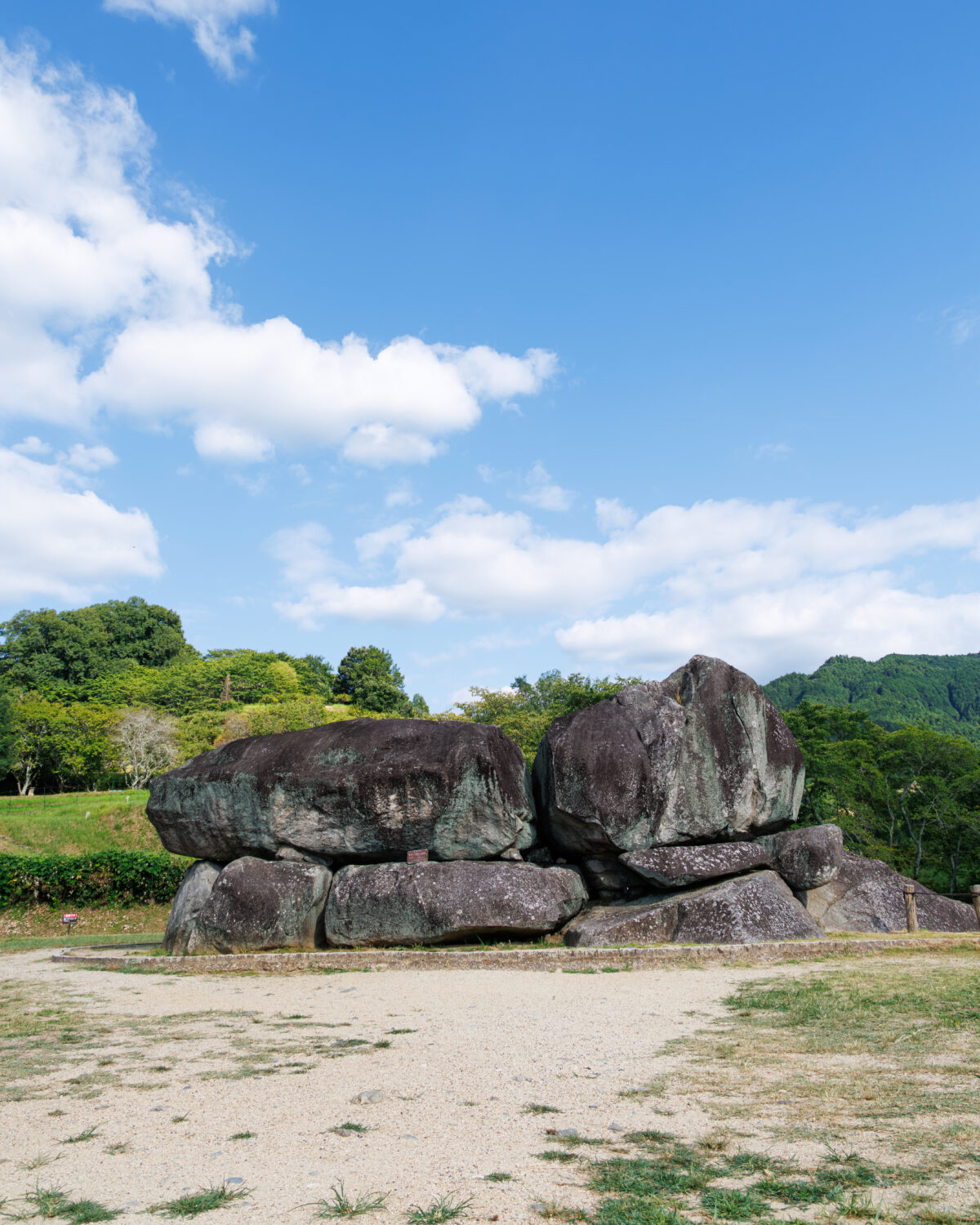
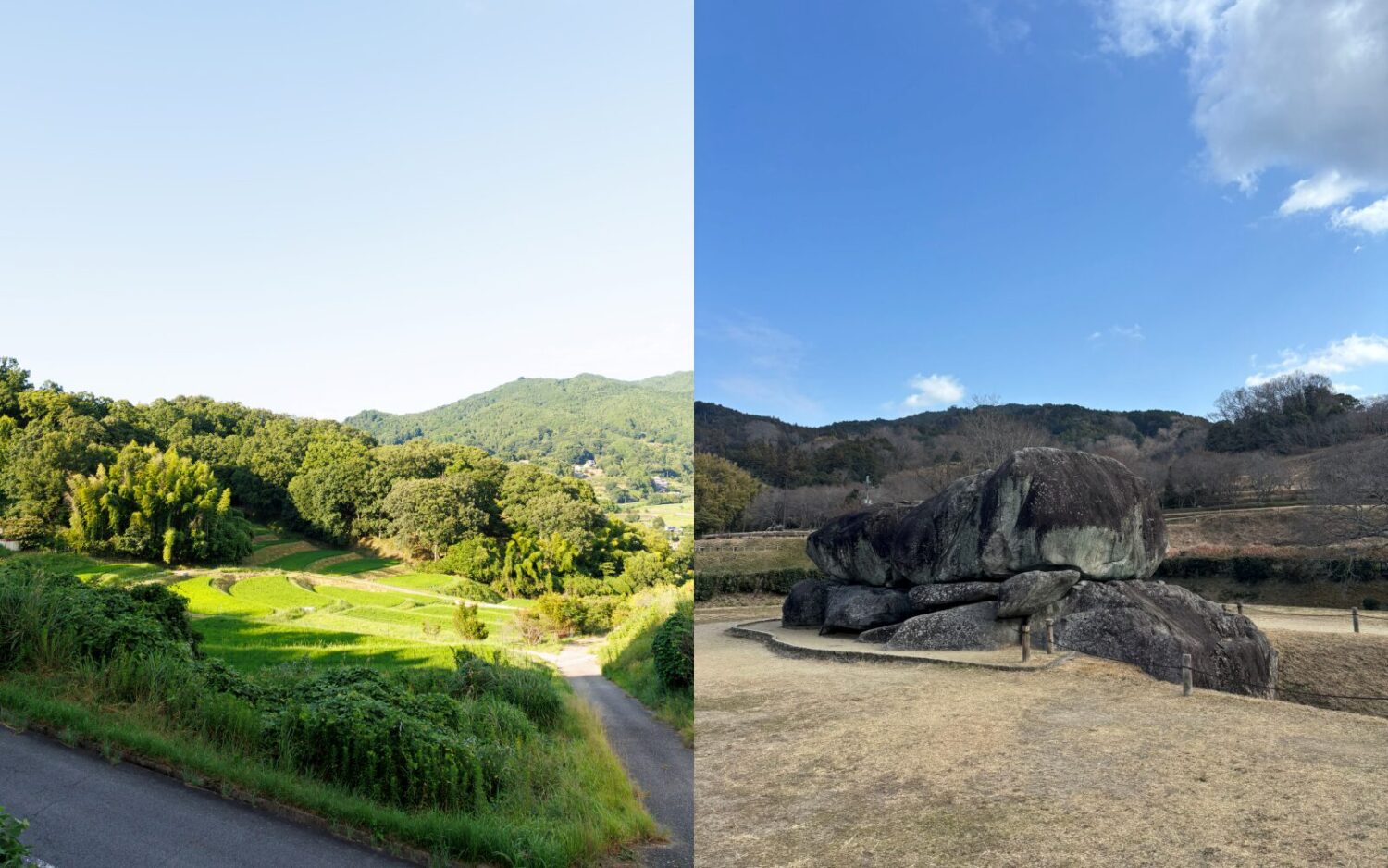
If you see huge stones arranged in the middle of a field, don’t mistake them for just an ordinary pile of rocks. This is the Ishibutai Kofun (石舞台古墳), a renowned ancient tomb in Asuka.
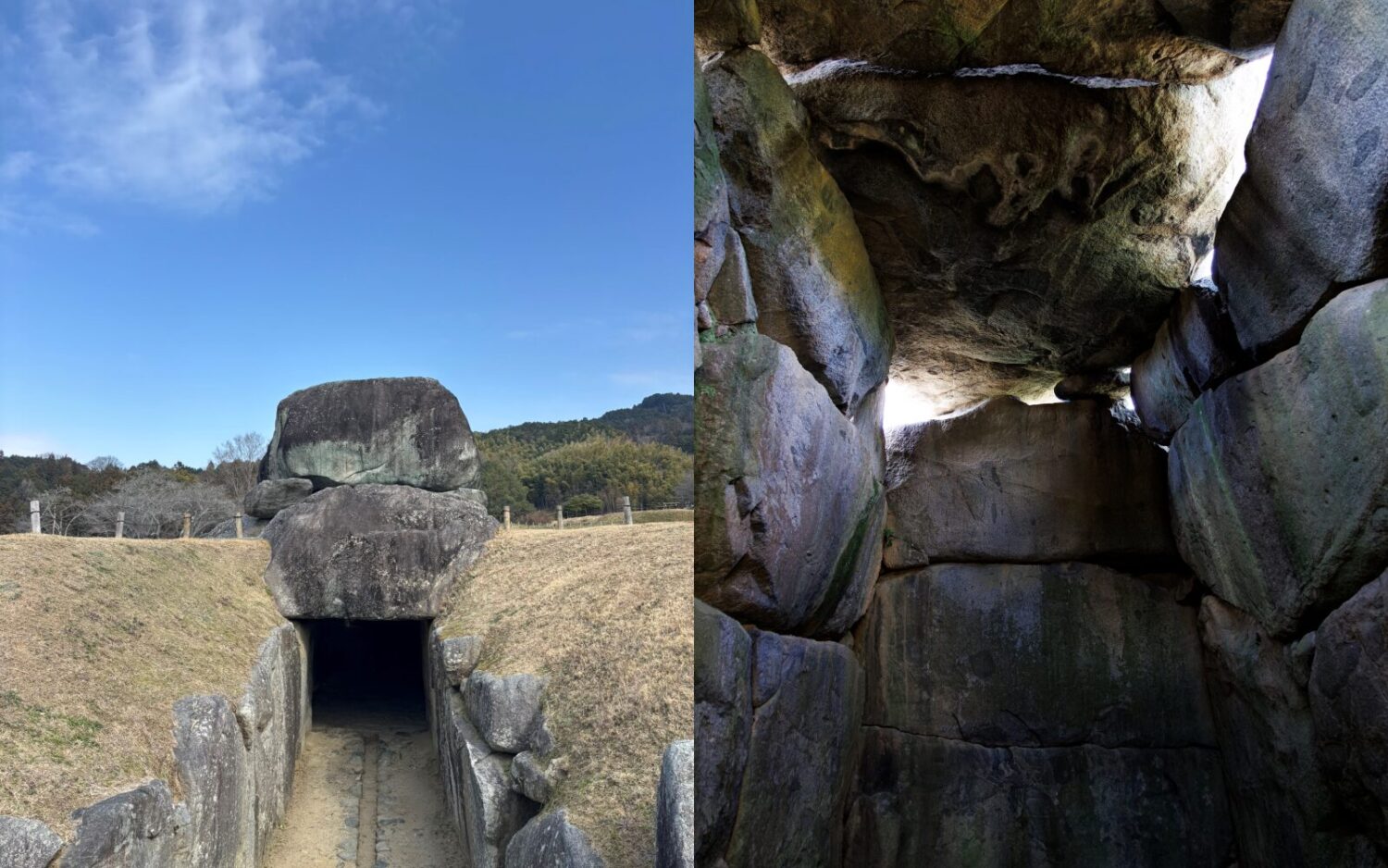
The term “Kofun (古墳)” refers to large tombs or burial mounds built for the elite in ancient Japan, particularly during the Kofun period. During this time, large burial chambers and earthen mounds were constructed for prominent figures. The Ishibutai Kofun is a massive stone tomb consisting of a burial chamber made up of huge stones. While the tomb was originally covered by an earthen mound, the stone chamber is now clearly visible and has become one of the iconic landmarks of Asuka.
More about Ishibutai Kofun
Address
- 254 Shimasho, Asuka, Takaichi District, Nara 634-0112
How to Get There
- From Asuka Station or Kashiharajingu-mae Station, take the Aka Kame bus (bound for Kashiharajingu-mae Eki Minamiguchi) and get off at Ishibutai Bus Stop (15 mins), then walk for about 3 mins.
Website
Map
*.。.*゚*.。.*゚*
-
- Kitora Kofun
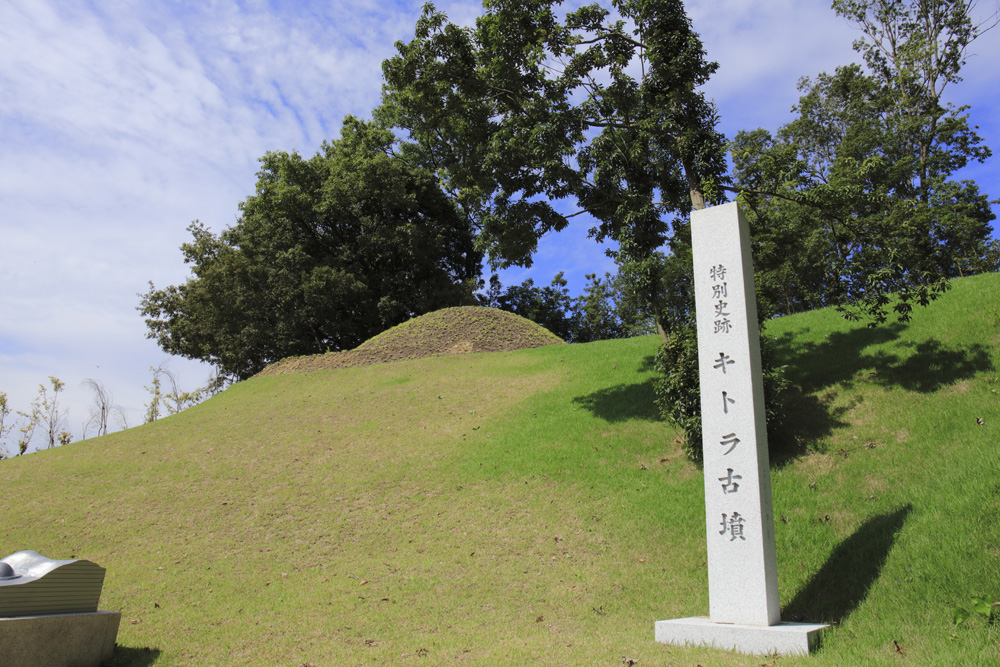
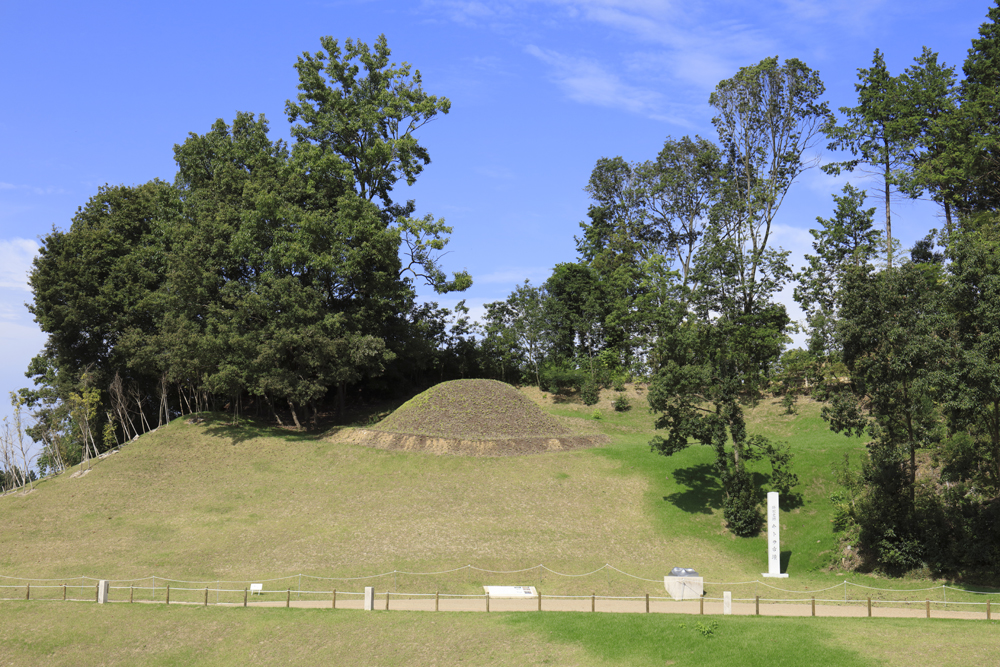
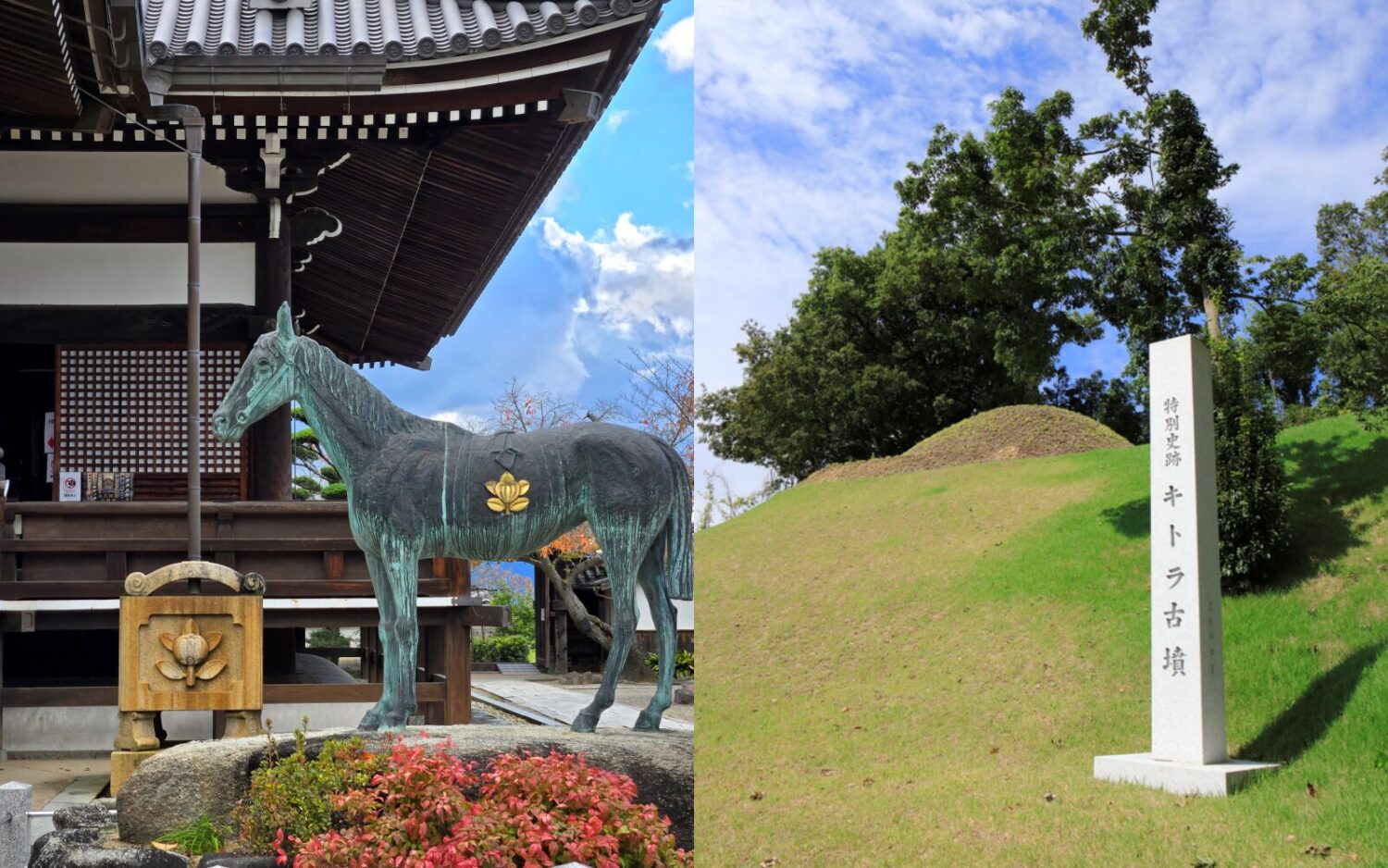
Another must-visit destination for history enthusiasts is Kitora Kofun (キトラ古墳). This ancient burial mound is famous for the paintings inside its burial chamber, particularly the Shijin (四神), meaning the “Four Deities”: the Azure Dragon, White Tiger, Vermilion Bird, and Black Tortoise. These are divine guardian beasts representing the four cardinal directions according to East Asian beliefs.
More about Kitora Kofun
Address
- 243 Abeyama, Asuka, Takaichi District, Nara 634-0134
How to Get There
- Take a Kintetsu train to Tsubosakayama Station, then walk for about 15 minutes.
Website
Map
Dress in Period Costume: Channel the Spirit of Ancient Japan and Explore Asuka
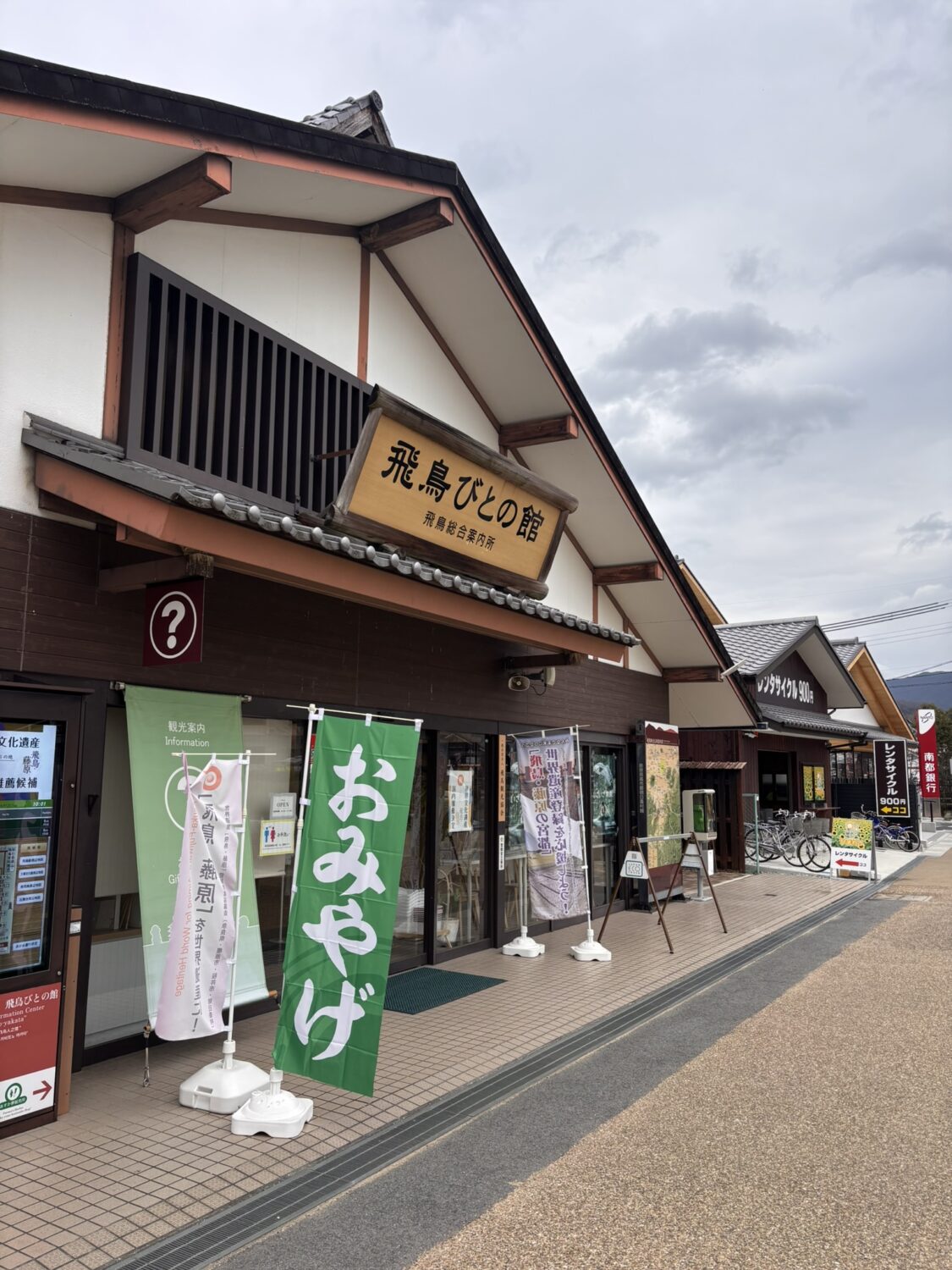
If simply strolling through the ancient ruins still doesn’t feel like enough, Asuka offers another exciting activity: dressing up in traditional Japanese costumes and exploring the area!
Upon arriving at Asuka Station, you might notice the Asukabito-no-Yakata (飛鳥びとの館) Tourist Information Center. Many visitors may not realize that this facility also offers traditional costume rentals. There are a variety of outfits to choose from, including attire inspired by the clothing of royalty and nobles, as well as costumes of court ladies and attendants from the Asuka period. You can choose whichever style you like.
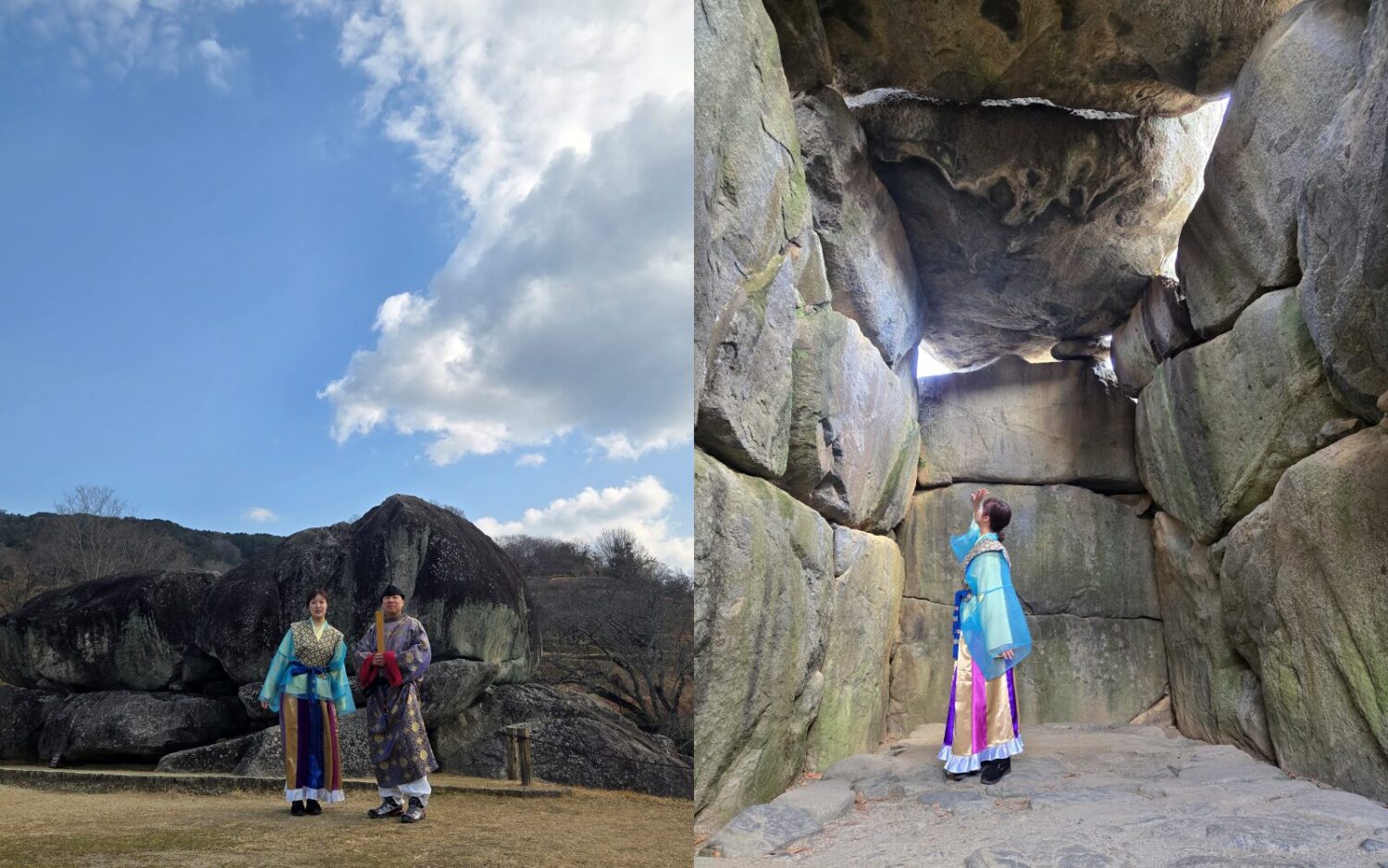
Once you are dressed in your chosen outfit, you can head out and enjoy exploring the ancient ruins and various sightseeing spots. Just imagine transforming from an ordinary tourist into someone from over 1,300 years ago, walking amidst Asuka’s rice fields, mountains, and historic sites. This is sure to be an experience and photo opportunity unlike any typical trip to Japan!
Ride the “Shijin Liner”: The Only Limited Express Train from Osaka to Asuka

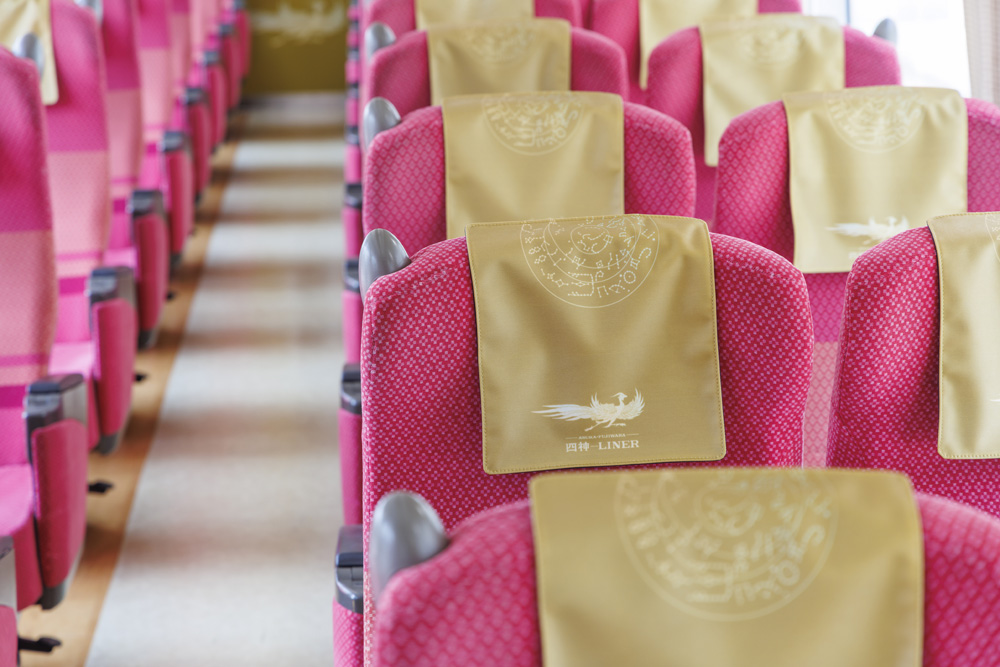
If you want to truly immerse yourself in the essence of Asuka, we highly recommend traveling to Asuka on the “Shijin Liner,” a limited express train.
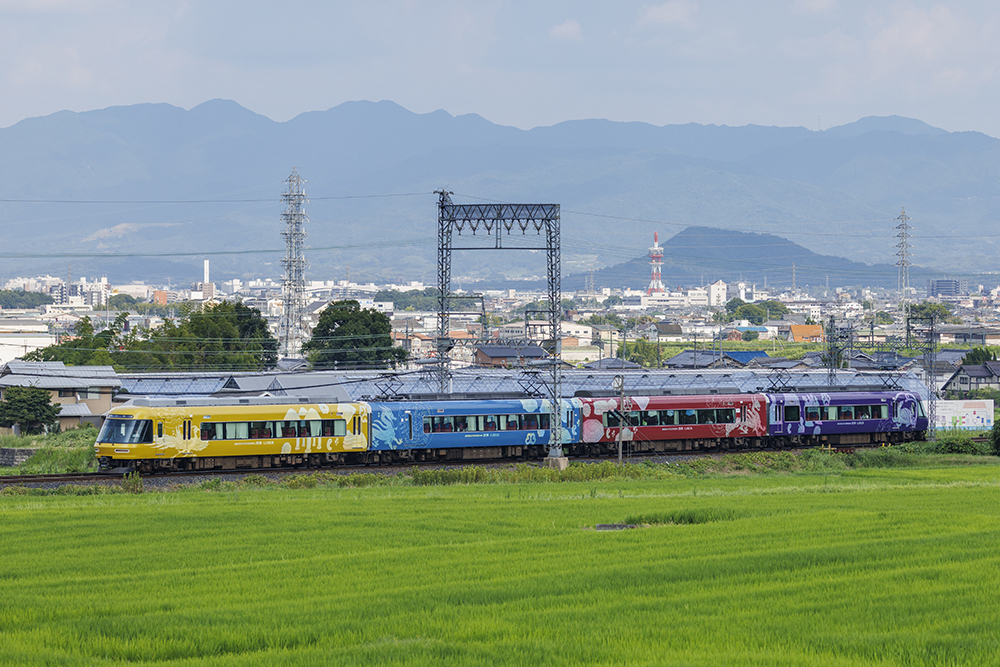
Since August 1, 2026, Kintetsu has operated the special Asuka-Fujiwara “Shijin Liner,” a limited express train featuring a newly decorated Sakura Liner inspired by the story of Asuka-Fujiwara.
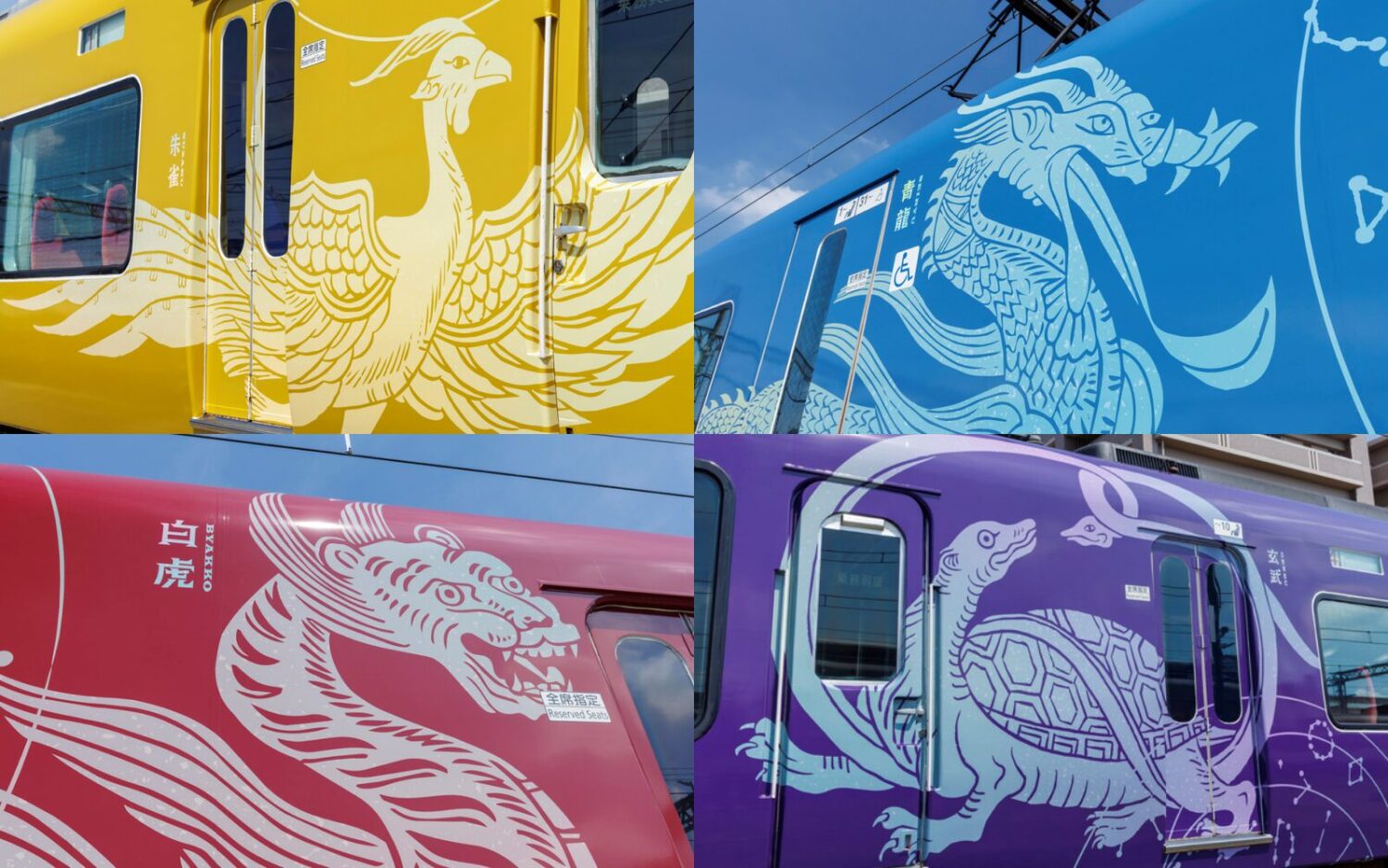
The train’s exterior is adorned with images and patterns inspired by the “Four Deities” (Shijin / 四神) featured in the Kitora Kofun: Seiryu (Azure Dragon), Byakko (White Tiger), Suzaku (Vermilion Bird), and Genbu (Black Tortoise). It also features historic sites and beautiful landscapes of Asuka-Fujiwara.

This train operates between Osaka-Abenobashi Station and Yoshino Station, passing through key stations such as Kashiharajingu-mae Station and Asuka Station. This makes it convenient to travel from Osaka to the Asuka area.
However, please note that there is only one “Shijin Liner” service!
All of these are reasons why Asuka-Fujiwara was designated a World Heritage Site in 2026. So, if you’re looking for a Japanese destination that offers history, culture, nature, and the peaceful atmosphere of the Japanese countryside, consider visiting Asuka-Fujiwara and discovering this land where Japan’s origins lie. Sometimes, the most fascinating travel experiences may not be found at the places everyone knows, but rather in traveling back to where Japan’s story began.😊
Source :
https://world-heritage-quest.com/ancient-capitals-of-asuka-and-fujiwara/
https://asuka-fujiwara.jp/asuka-fujiwara/
https://asukamura.com/sightseeing/kodai-isho/
https://www.kintetsu.co.jp/zigyou/shijinliner/
https://www.kashihara-kanko.or.jp/feature/detail.php?fid=45
https://www.kashihara-kanko.or.jp/feature/detail.php?fid=40
https://asukamura.com/asuka-fujiwara/
https://sakuraikanko.com/sp/sekaiisannhego/
Read more articles
- A recommendation for solo travelers! Come experience the charm of Japan’s lesser-known side in “Ishikiri” and “Ikoma”
- Enjoy breathtaking views of Ago Bay from ‘Yokoyama Observatory’, and we’ll recommend popular hiking trails in Ise-Shima National Park.
- ☔ Rainy days can be fun! Indoor spot for the whole family during Japan’s rainy season!
Recommended Links

ทุกเรื่องราวน่าสนใจเกี่ยวกับญี่ปุ่น เรารวบรวมไว้ที่นี่แล้ว! จะกิน เที่ยว ช้อป หาข่าว หรือหาข้อมูลต่างๆ เราจัดให้หมด เพจเฟซบุ๊กเราก็มีนะ เสิร์ชเลย > fromJapan.th ❤



Keep up with the latest trends, news, and fun activities. For more info, check out fromJapan page!