7 Easy Hiking Trails to Enjoy Japan’s Autumn Foliage in Nara, Kyoto, and Mie
Nov 12, 2026
7 Easy Hiking Trails to Enjoy Japan’s Autumn Foliage in Nara, Kyoto, and Mie

Admiring the autumn leaves is one of the highlights of traveling in Japan during the fall. And one of the best ways to enjoy nature is to go hiking!
Japan offers a wide variety of hiking trails, from beginner-friendly routes to those for experienced hikers. One of the greatest joys of hiking in Japan is the opportunity to experience its rich natural beauty up close. Autumn is an especially wonderful season, when you can enjoy a leisurely hike while admiring the beautiful autumn foliage along the way.
In this article, we introduce seven easy hiking trails to enjoy japan’s autumn foliage in Nara, Kyoto, and Mie. So, without further ado, let’s explore these trails adorned with the vibrant colors of autumn!
Index: 7 Easy Hiking Trails to Enjoy Japan’s Autumn Foliage in Nara, Kyoto, and Mie
- Nara Prefecture: Asuka Trail – Approx. 9 km
- Nara Prefecture: Yagyu Kaido Trail – Approx. 12 km
- Nara Prefecture: Mount Yoshino Circular Trail – Approx. 9 km
- Nara Prefecture: Mitarai Valley Trail – Approx. 7 km
- Kyoto Prefecture: Stone Buddhas Pilgrimage Trail – Approx. 9 km
- Mie Prefecture: Yunoyama Onsen Circular Trail – Approx. 1.5 km
- Mie Prefecture: Akame 48 Waterfalls Trail – Approx. 9 km
1. Nara Prefecture: Asuka Trail – Approx. 9 km
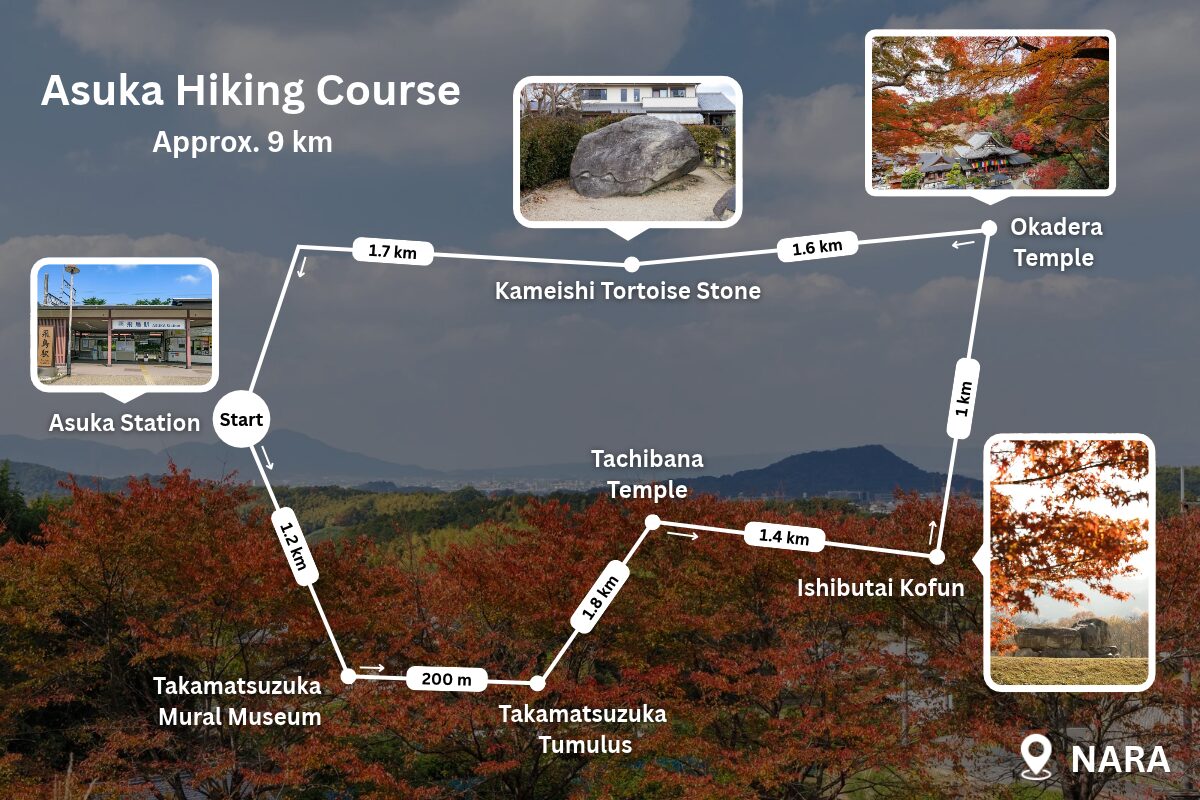
Starting Point: Asuka Station (approx. 1.2 km walk) → Takamatsuzuka Mural Museum (approx. 200 m walk) → Takamatsuzuka Kofun (approx. 1.8 km walk; enjoy peaceful rural scenery) → Tachibana-dera Temple (approx. 1.4 km walk) → Ishibutai Kofun (approx. 1 km walk; includes a steep uphill section) → Oka-dera Temple (approx. 1.6 km walk) → Kameishi (Turtle Stone) (approx. 1.7 km walk) → Asuka Station
-
- Introducing the Asuka Trail (Takamatsuzuka Kofun ~ Ishibutai Kofun ~ Oka-dera Temple)
The Asuka Trail is a hiking route approximately 9 kilometers long. Along the way, you will visit several historical sites in the Asuka-Fujiwara area, including Ishibutai Kofun, Takamatsuzuka Kofun, and Tachibana-dera Temple, which are among the component sites of the Asuka-Fujiwara Palace Sites, inscribed on the UNESCO World Heritage List on July 26, 2026.
The trail winds through Japan’s traditional countryside, where peaceful rural landscapes stretch as far as the eye can see. In autumn, the surrounding trees turn shades of red and orange, adding vibrant splashes of color to the tranquil scenery.
-
- Highlights
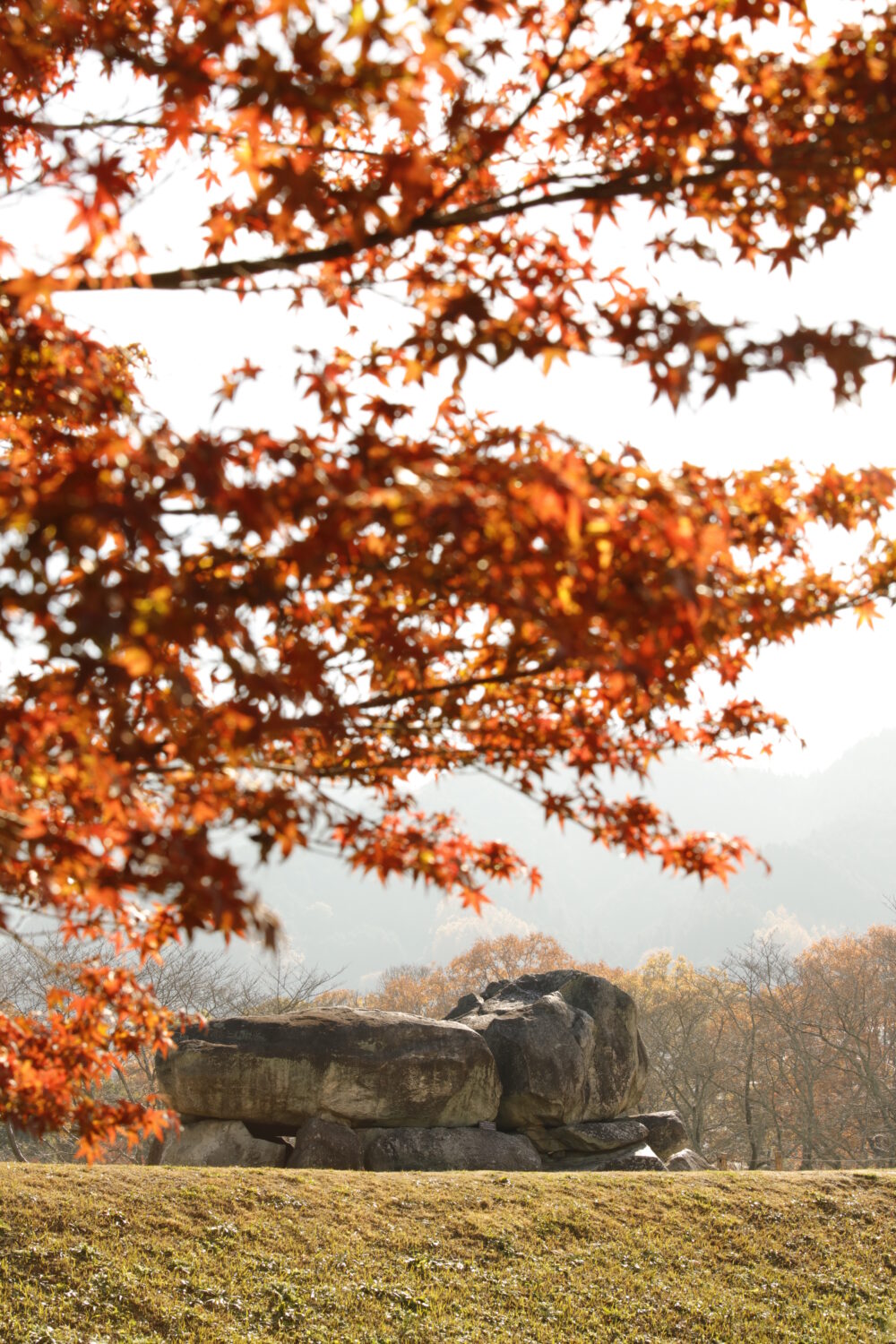 Ishibutai Kofun is one of Asuka’s most iconic historical landmarks and a must-visit spot in the area. It is renowned for its impressive structure, built from enormous stone slabs, and is home to one of the largest burial chambers of any ancient burial mound in Japan.
The enormous stones visible from the outside actually form the roof of the burial chamber. Constructing a tomb of such remarkable scale would have required not only advanced engineering skills for its time but also the collective effort of a great many people.
The ancient burial mound is set against a backdrop of mountains and rolling hills, with a vast open plain stretching out before it. Visitors can also enjoy beautiful views of Mount Nijo. In autumn, the foliage surrounding the site takes on vibrant hues, adding a splash of seasonal color to the historic scenery.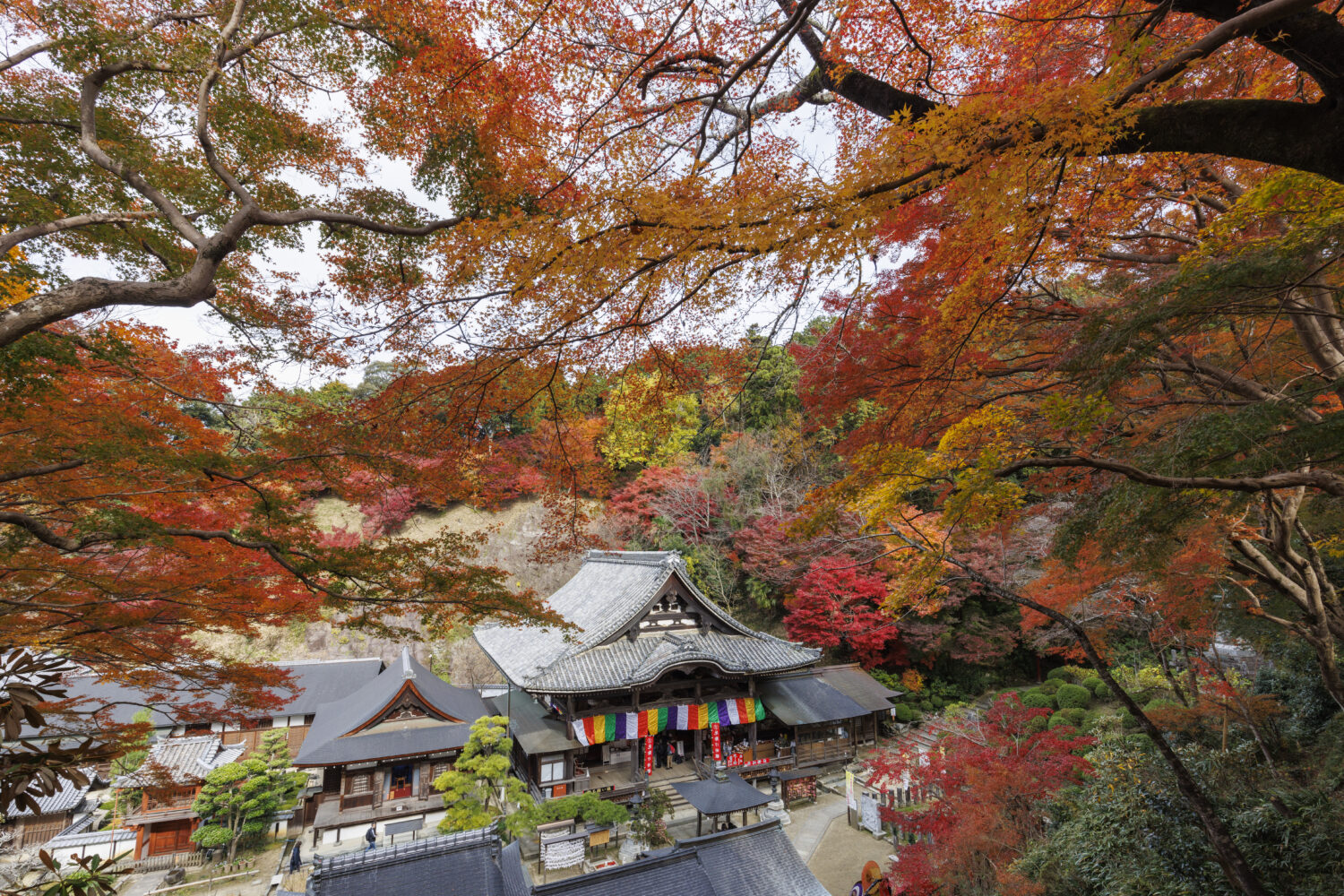 Oka-dera Temple is renowned as Japan’s first sacred site dedicated to warding off misfortune. Every autumn, the maple trees throughout the temple grounds burst into brilliant colors. The approach leading to the three-storied pagoda, main hall, and inner sanctuary transforms into a tunnel of autumn leaves, creating a breathtaking scene that looks like something straight out of a painting.
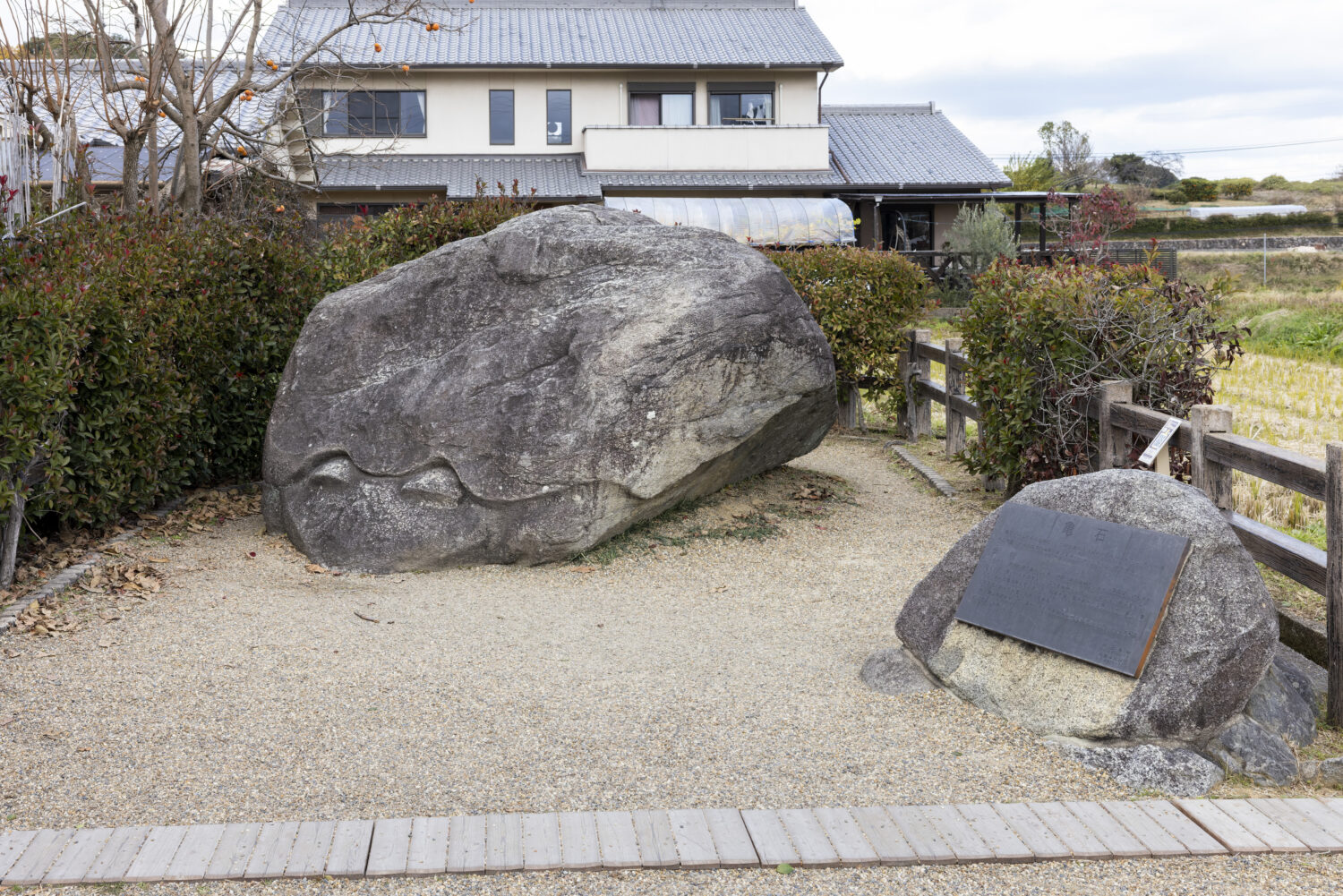 Kameishi (Turtle Stone) is one of Asuka’s most distinctive stone monuments. Its unusual presence beside the fields, set against the peaceful rural landscape, makes it a particularly memorable sight.
The stone measures approximately 3.6 meters in length, 2.1 meters in width, and 1.8 meters in height. It came to be known as “Kameishi,” meaning “Turtle Stone,” because its lower section resembles the face of a turtle.
2. Nara Prefecture: Yagyu Kaido Trail – Approx. 12 km
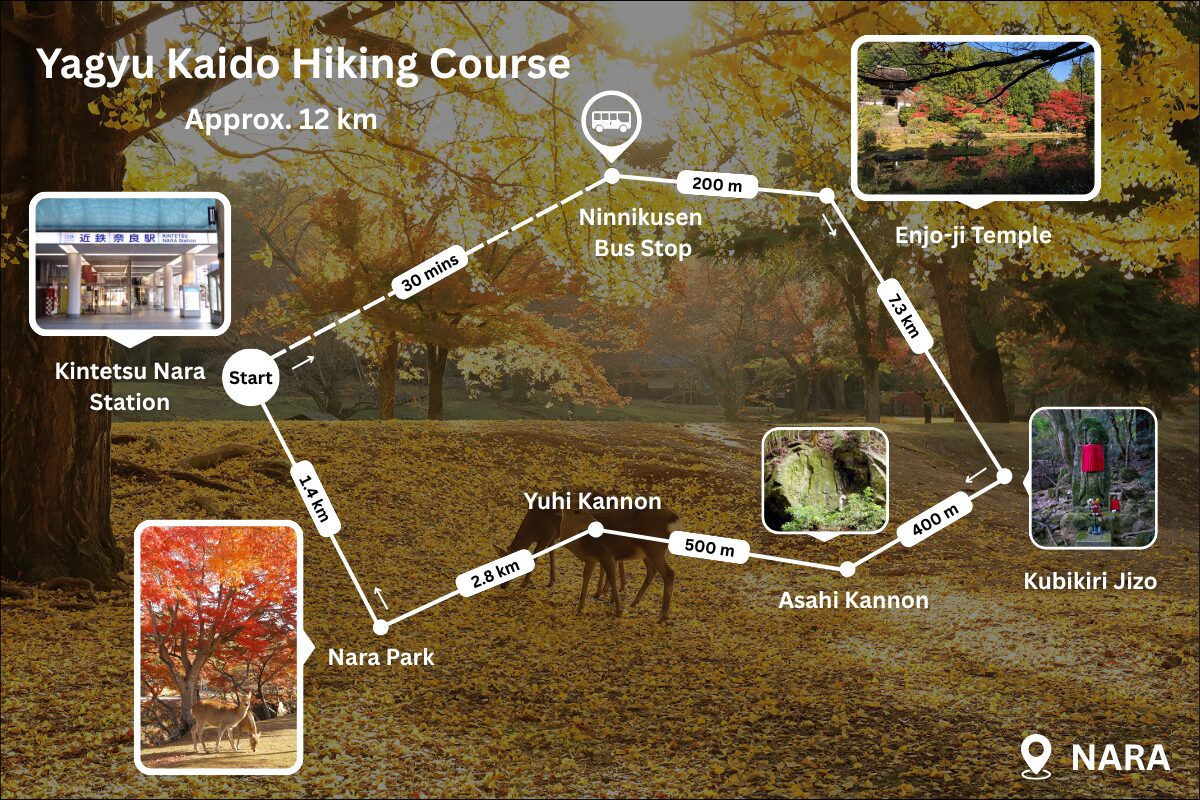 Starting Point: Kintetsu-Nara Station (approx. 30-minute bus ride) —- Ninnikusen Bus Stop (approx. 200 m walk) —- Enjo-ji Temple (approx. 7.3 km walk) —- Kubikiri Jizo (approx. 400 m walk) —- Asahi Kannon (approx. 500 m walk; stone Buddha statues are scattered along the stone-paved path) —- Yuhigaoka Kannon (approx. 2.8 km walk) —- Nara Park (approx. 1.4 km walk) —- Kintetsu-Nara Station
-
- Introducing the Yagyu Kaido Trail (Takisaka-no-Michi)
The Yagyu Kaido Trail is approximately 12 kilometers long, starting at Enjo-ji Temple, one of Nara’s most celebrated Autumn Foliage spots.
As you enter Takisaka-no-Michi, the trail takes you along an ancient stone-paved road that has remained largely unchanged for centuries. It is believed to be part of a historic route maintained by the Yagyu clan, a family that rose to prominence as feudal lords and served as swordsmanship instructors to the shogunate. The stone pavement is thought to have been laid to make travel along the route safer and more comfortable for those passing through.
-
- Highlights
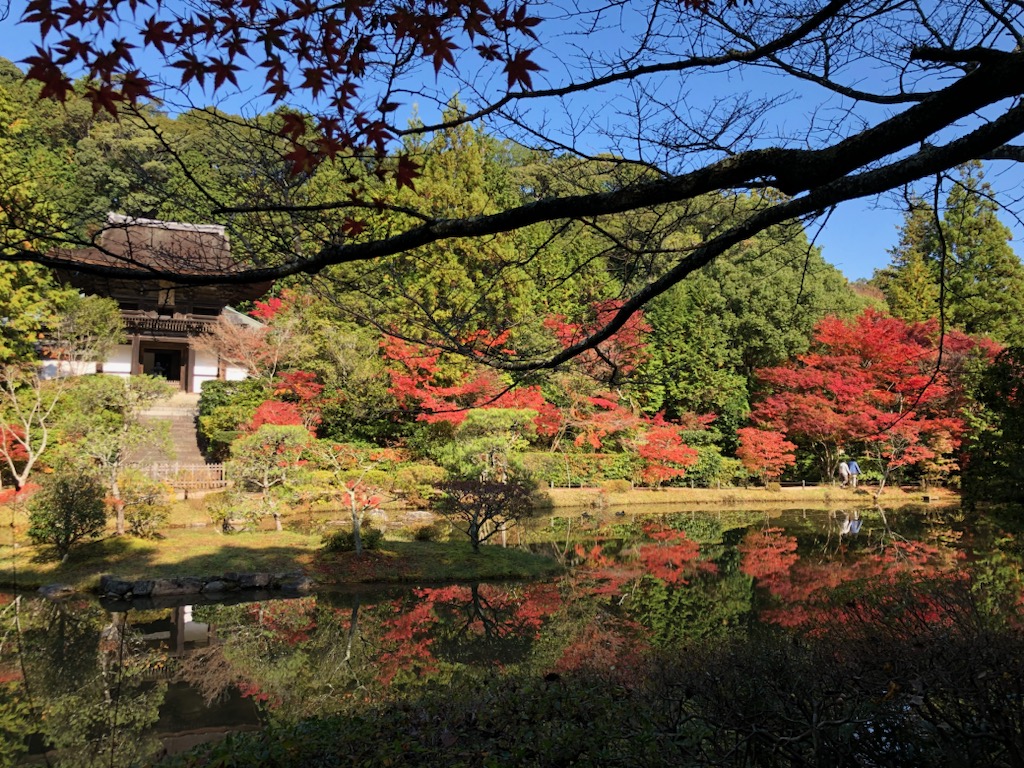 Enjo-ji Temple is one of the historic temples located along the Yagyu Kaido. The Pure Land-style garden in front of its temple gate is believed to date back to the late Heian period. In autumn, the colorful foliage is reflected on the surface of the pond, creating an even more enchanting scene.
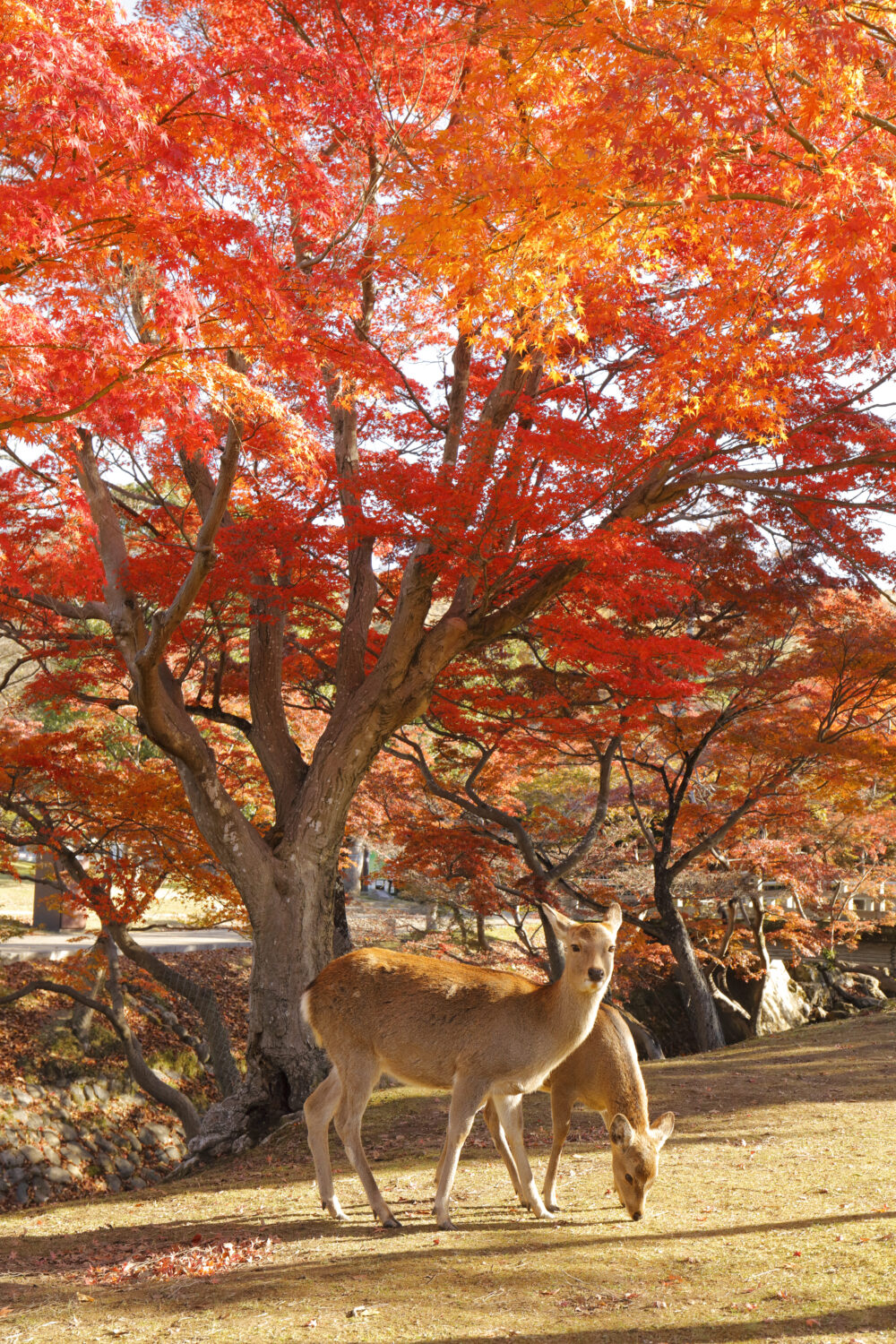 Nara Park is one of the most iconic attractions in the ancient city of Nara. It is also widely known as the home of wild deer, which are designated as a Natural Monument of Japan. Spanning an expansive area of approximately 5.11 million square meters, the park is surrounded by historic temples, shrines, and cultural landmarks, including Kasuga Taisha Shrine and Todaiji Temple.
Another highlight of the park is its beautiful scenery, which changes with each season. In autumn, maple and ginkgo trees turn brilliant shades of red and gold, creating a striking contrast with the surrounding evergreen trees.
3. Nara Prefecture: Mount Yoshino Circular Trail – Approx. 9 km
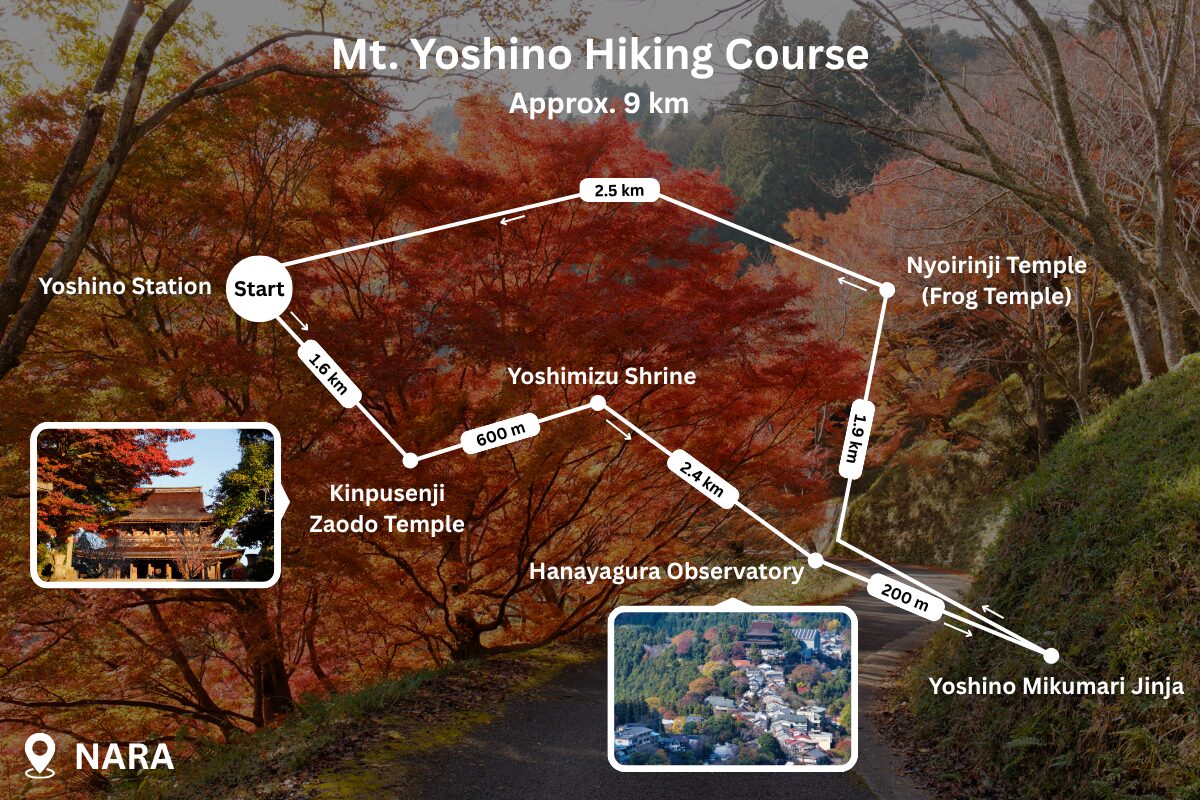 Starting Point: Yoshino Station (approx. 1.6 km walk) —- Kinpusen-ji Temple, Zao-do Hall (approx. 600 m walk) —- Yoshimizu Shrine (approx. 2.4 km walk) —- Hanayagura Observation Deck (approx. 200 m walk) —- Yoshino Mikumari Shrine (approx. 1.9 km walk) —- Nyoirin-ji Temple (approx. 2.5 km walk) —- Yoshino Station
-
- Introducing the Mount Yoshino Circular Trail
The Mount Yoshino Circular Trail is a scenic walking route approximately 9 kilometers long. In autumn, the entire mountainside is adorned with vibrant fall foliage, offering beautiful views at every turn. Along the way, you will also come across historic temples and shrines that are part of a UNESCO World Heritage Site, making this trail a wonderful opportunity to enjoy both the natural scenery and the area’s rich history and culture.
Although the route has an elevation difference of approximately 300 meters, all paths are paved, making it relatively easy to walk compared to unpaved mountain trails.
-
- Highlights
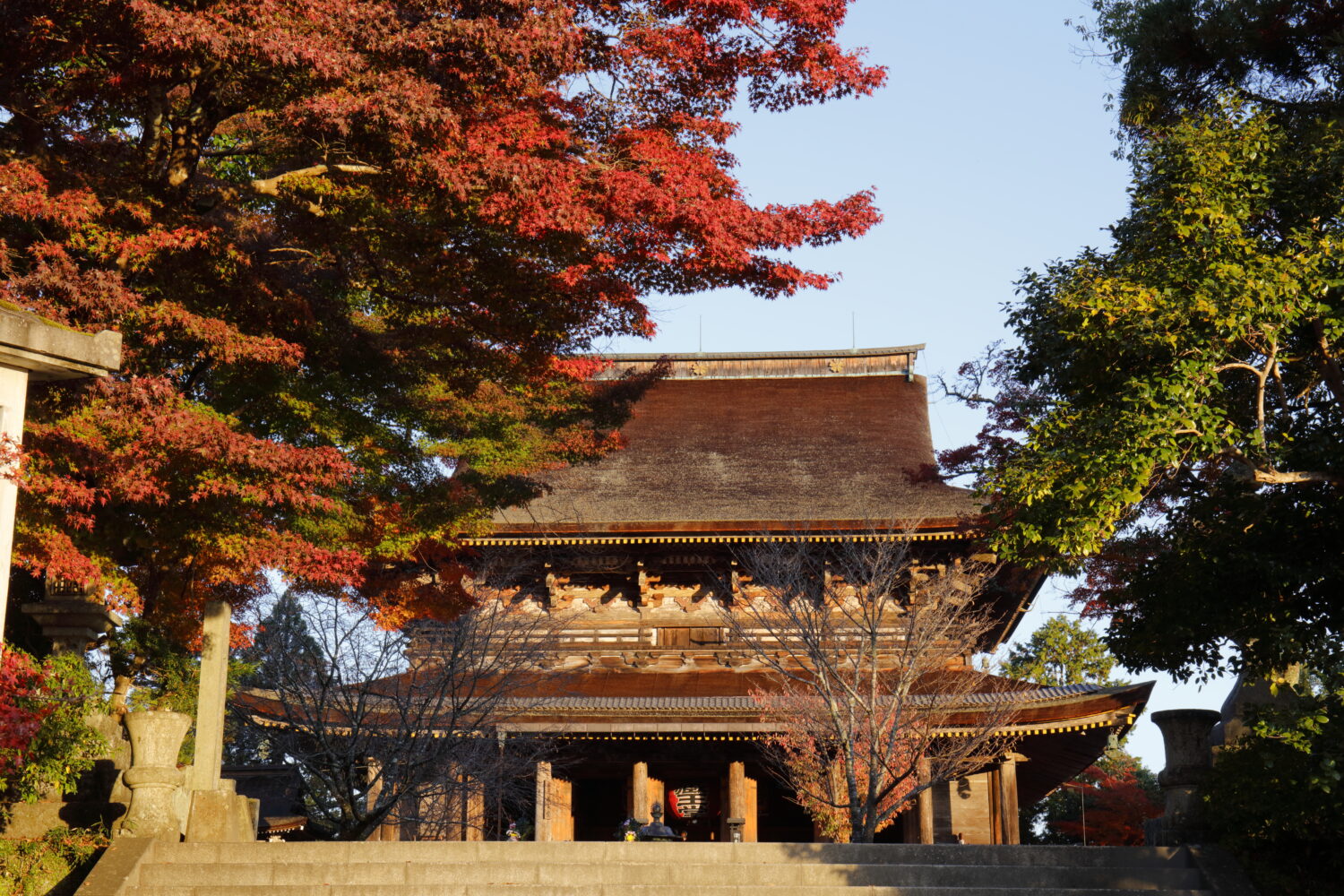 Kinpusen-ji Temple has a history spanning approximately 1,300 years. Its main hall, Zao-do, is one of the most iconic landmarks of Mount Yoshino.
Kinpusen-ji Temple plays an important role in Shugendo, a Japanese spiritual tradition rooted in mountain worship. Shugendo emphasizes reverence for nature and respect for both Buddhist deities and Shinto gods.
Zao Gongen, a central deity in Shugendo belief, is often depicted with a fierce and wrathful expression. Despite this intimidating appearance, the deity is revered as a protector of people and the world.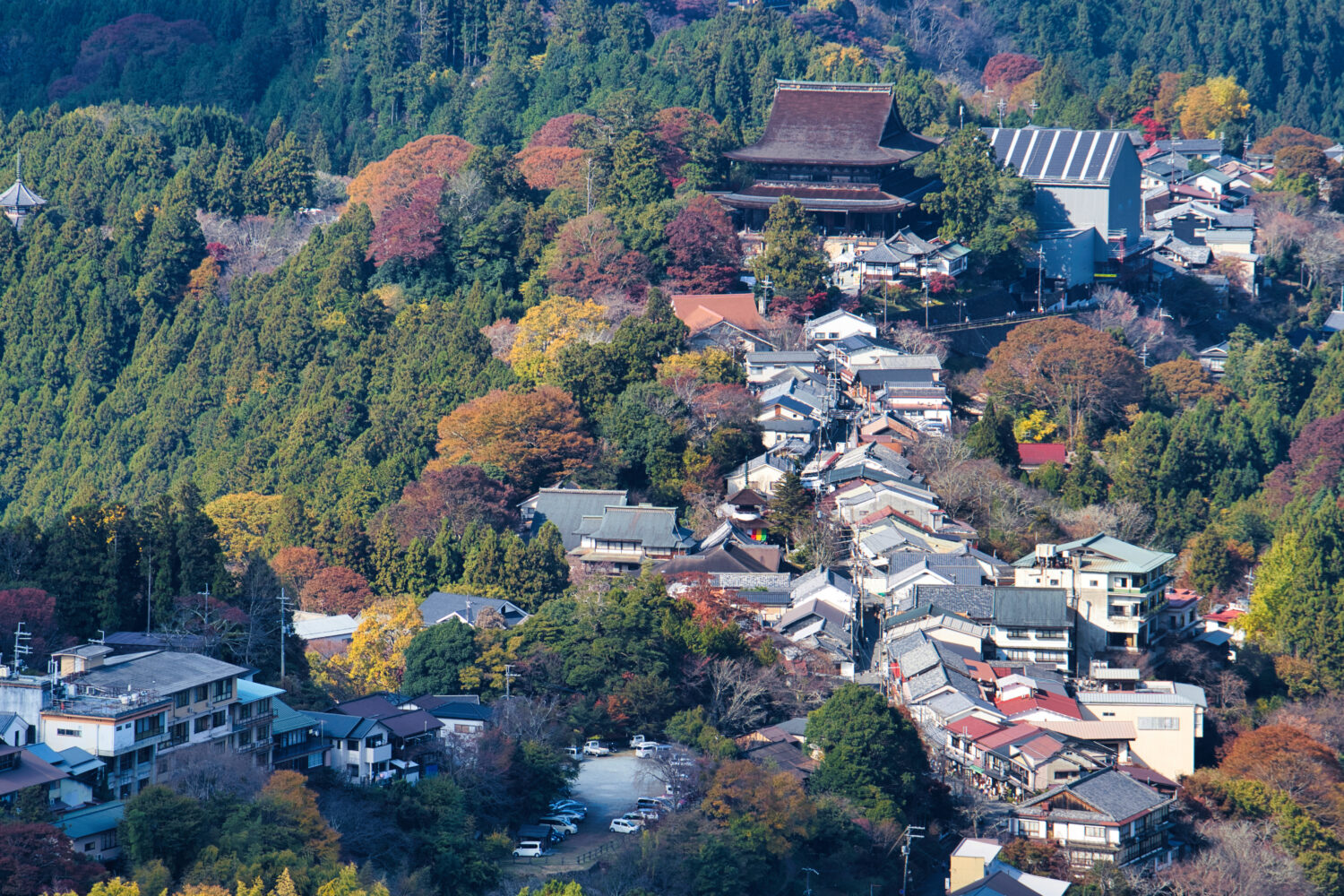 Hanayagura Observation Deck is a scenic viewpoint situated at an elevation of approximately 600 meters. It is one of Mount Yoshino’s most famous viewpoints, renowned for its breathtaking panorama known as Hitome Senbon, meaning “a thousand cherry trees at a glance,” where countless cherry trees can be admired all at once.
From the observation deck, visitors can enjoy sweeping views across Mount Yoshino, including the areas known as Kami-senbon and Naka-senbon, as well as Zao-do Hall. In autumn, approximately 30,000 cherry trees turn shades of red and yellow, transforming the entire mountainside into a stunning tapestry of fall colors.
4. Nara Prefecture: Mitarai Valley Trail – Approx. 7 km
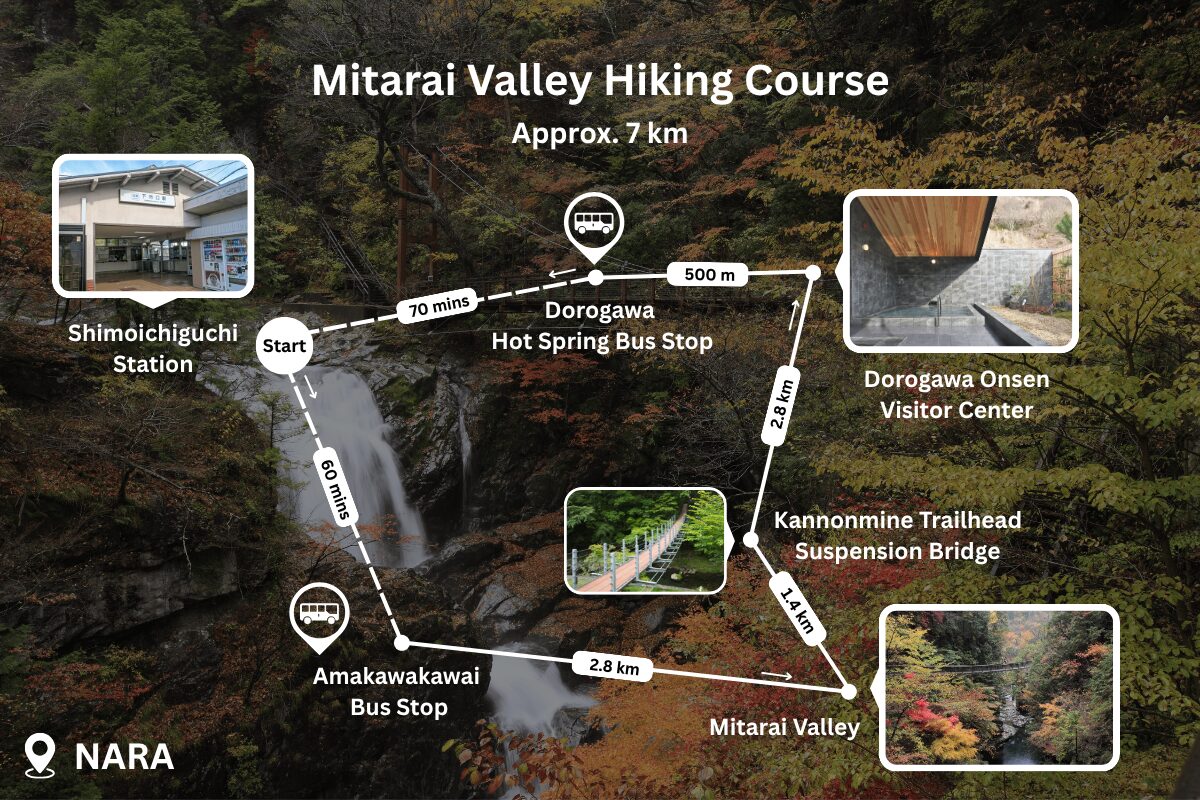
Starting Point: Shimoichiguchi Station (approx. 60-minute bus ride) —- Tenkawa Kawai Bus Stop (approx. 2.8 km walk) → Mitarai Waterfall (approx. 1.4 km walk) —- Suspension Bridge at the Kannonmine Mountain Trailhead (approx. 2.8 km walk) —- Dorogawa Onsen Visitor Center (approx. 500 m walk) —- Dorogawa Onsen Bus Stop (approx. 70-minute bus ride) —- Shimoichiguchi Station
-
- Introducing the Mitarai Valley Trail (Dorogawa Nature Study Path)
The Mitarai Valley Trail stretches approximately 7 kilometers. It is one of the hiking trails where you can fully enjoy Japan’s autumn foliage. The trail is also renowned for its crystal-clear streams, which wind their way between enormous rocks. The water is so clear that you can see all the way down to the riverbed, creating a truly captivating natural landscape.
In autumn, the surrounding mountains are covered in brilliant fall foliage, creating a striking contrast with the emerald-green waters of the stream. After your hike, a visit to Dorogawa Onsen is the perfect way to unwind and soothe your tired muscles.
-
- Highlights
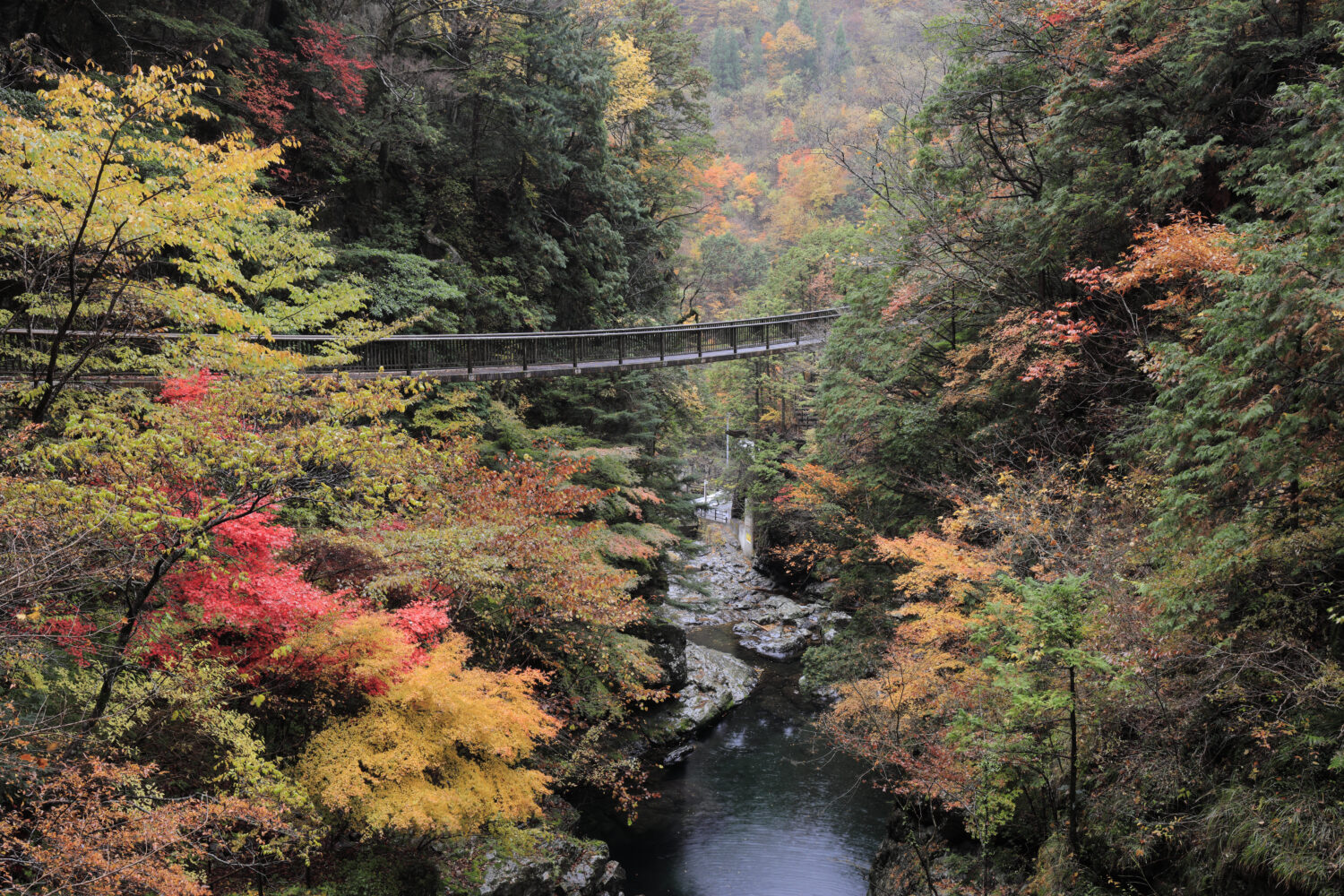 Mitarai Valley is a picturesque gorge dotted with waterfalls of various sizes and enormous rock formations, including the famous Mitarai Waterfall. Its diverse natural scenery offers something beautiful to discover at every turn.
In autumn, the entire valley is enveloped in vibrant fall colors. From the suspension bridges, visitors can take in breathtaking views of the crystal-clear streams and waterfalls flowing through the gorge.
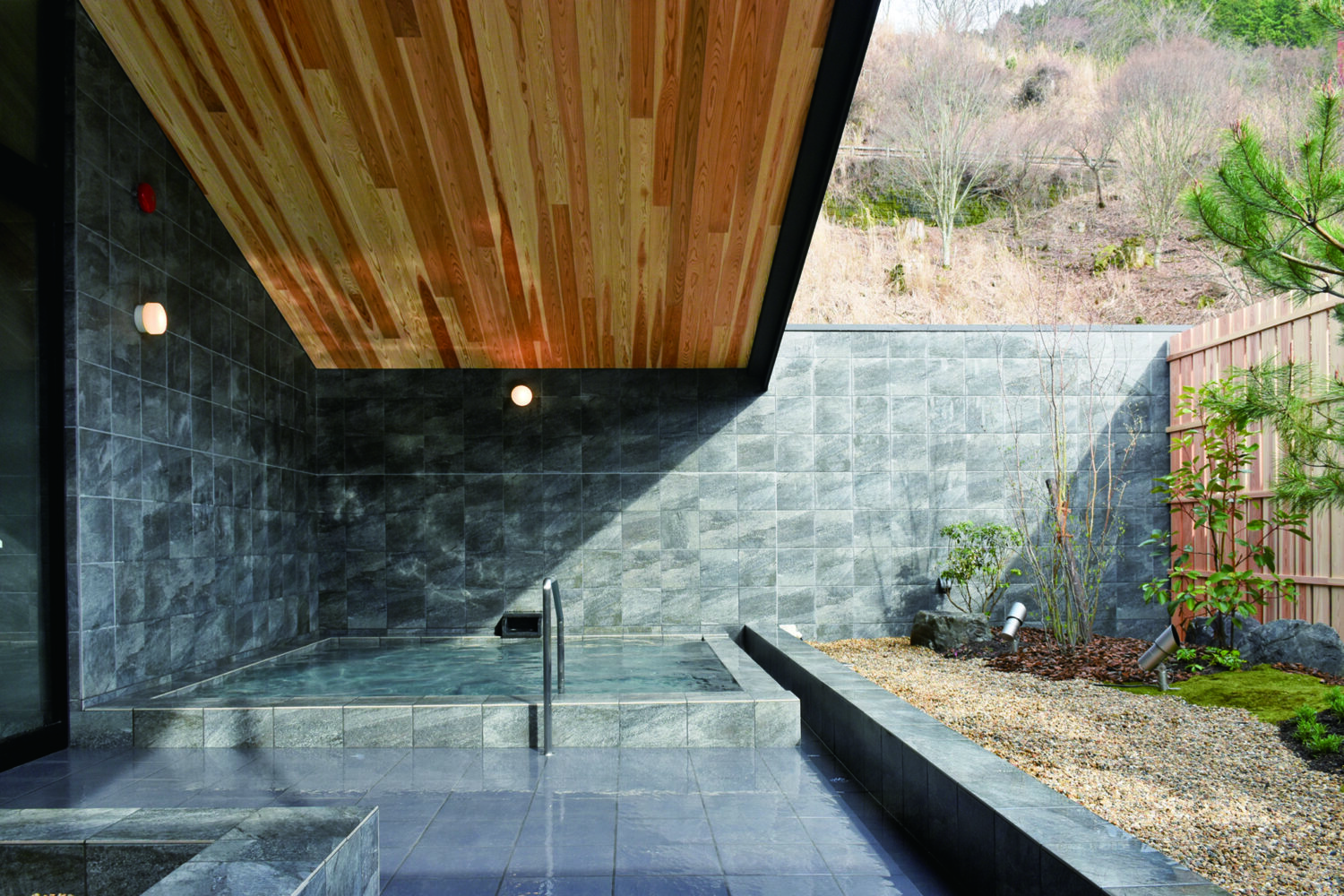 Dorogawa Onsen Visitor Center is located near the entrance to the Dorogawa Onsen area. The building features an abundance of locally renowned Yoshino cedar, creating a warm and welcoming atmosphere with the natural beauty of wood.
Rebuilt on the same site in 2024, the facility features stylish indoor and outdoor baths finished with stone-look tiles, creating a refined and relaxing atmosphere. The baths are also 1.5 times larger than they were before the renovation, offering plenty of space to unwind. The hot spring water is clear and colorless, with a gentle, mildly alkaline quality that feels soft on the skin. Day visitors are welcome, making it an ideal place to soothe tired muscles and relax after a full day of walking.
5. Kyoto Prefecture: Stone Buddhas Pilgrimage Trail – Approx. 9 km
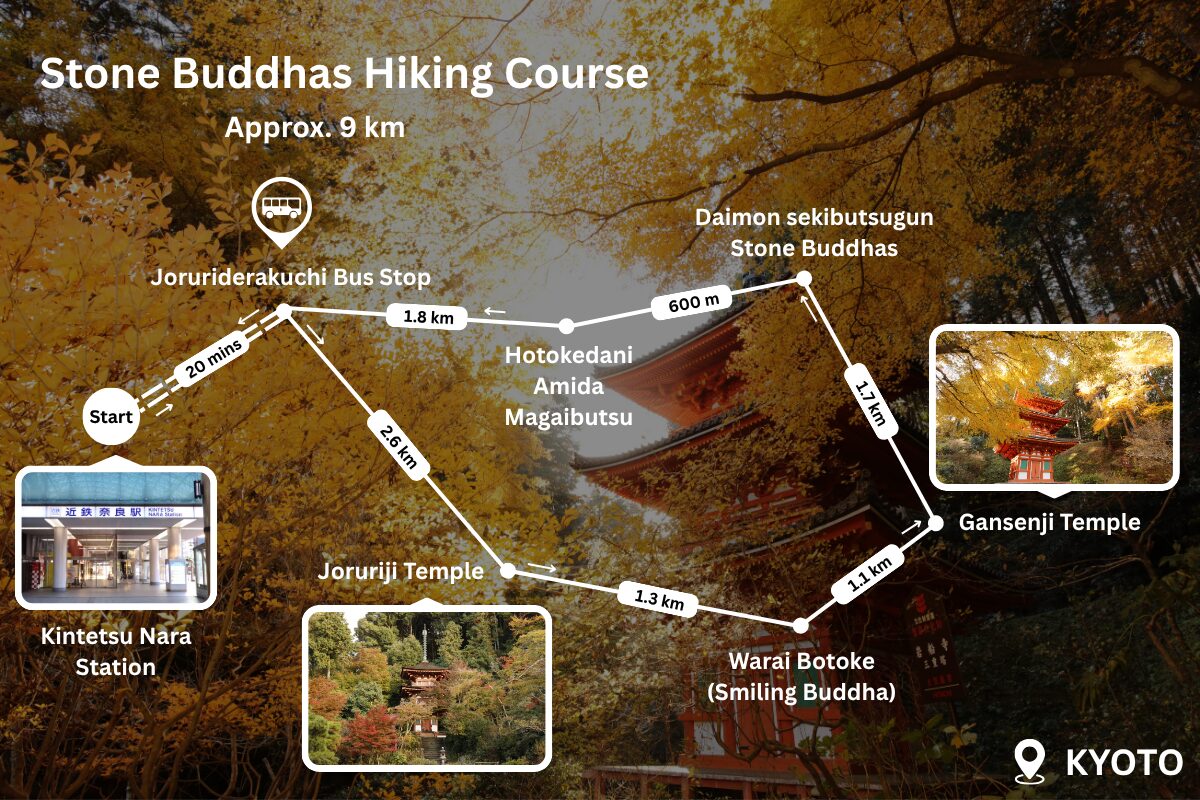 Starting Point: Kintetsu-Nara Station (approx. 20-minute bus ride) —- Joruriji-guchi Bus Stop (approx. 2.6 km walk; beautiful stone Buddha statues can be found along the way) —- Joruri-ji Temple (approx. 1.3 km walk) —- Warai Buddha (approx. 1.1 km walk) —- Gansen-ji Temple (approx. 1.7 km walk) —- Daimon Stone Buddha Group (approx. 600 m walk; the downhill section is somewhat steep but relatively easy to walk) —- Amida Stone Carving at Daimon Hotoke Valley (approx. 1.8 km walk) —- Joruriji-guchi Bus Stop (approx. 20-minute bus ride) —- Kintetsu-Nara Station
-
- Introducing the Stone Buddhas Pilgrimage Trail
The Stone Buddha Pilgrimage Trail is approximately 9 kilometers long and takes you through the Tono area, where numerous historic stone Buddha statues have been preserved. Along the “Stone Buddha Path,” which connects Joruri-ji Temple and Gansen-ji Temple—both renowned for their autumn foliage—you will find Buddhist images carved into rock faces, as well as distinctive stone statues scattered throughout the trail.
-
- Highlights
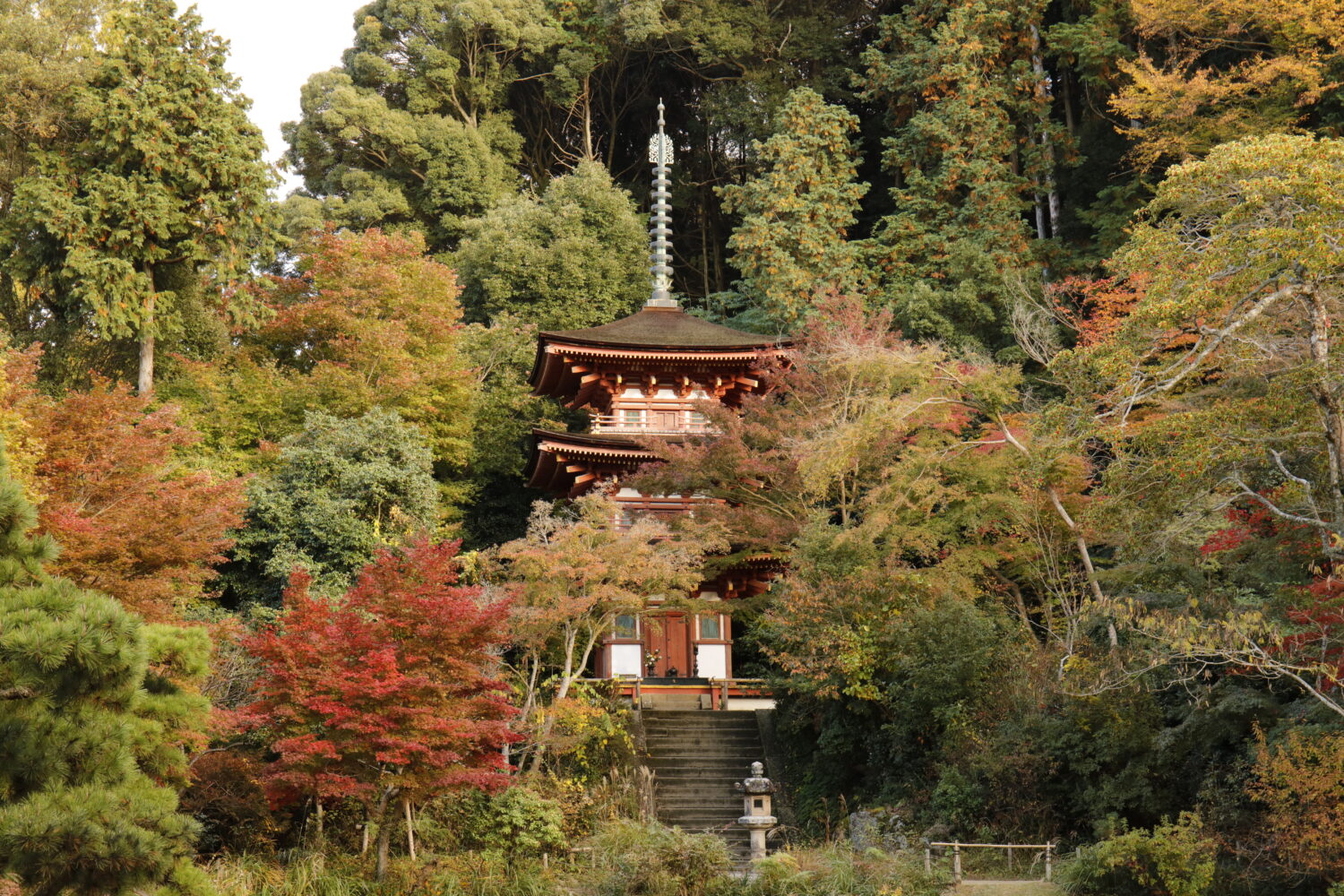 Joruri-ji Temple is a historic temple located in Kizugawa City, Kyoto Prefecture. It is especially admired for its beautiful garden, historic architecture, and vibrant autumn foliage that adds seasonal charm to the temple grounds. It is also well known as a popular destination for viewing autumn leaves.
The temple grounds feature a traditional Pure Land-style garden, distinguished by a pond at its center. The main hall stands on the western side of the pond, while a three-storied pagoda dating back to the Heian period stands on the eastern side. Together, these historic structures create a landscape steeped in history and timeless beauty.
As autumn deepens, the garden takes on an even more enchanting appearance. The maple trees surrounding the pond gradually turn brilliant shades of red and orange, with their vibrant colors reflected beautifully on the water’s surface. The result is a serene and picturesque scene that is sure to captivate visitors.
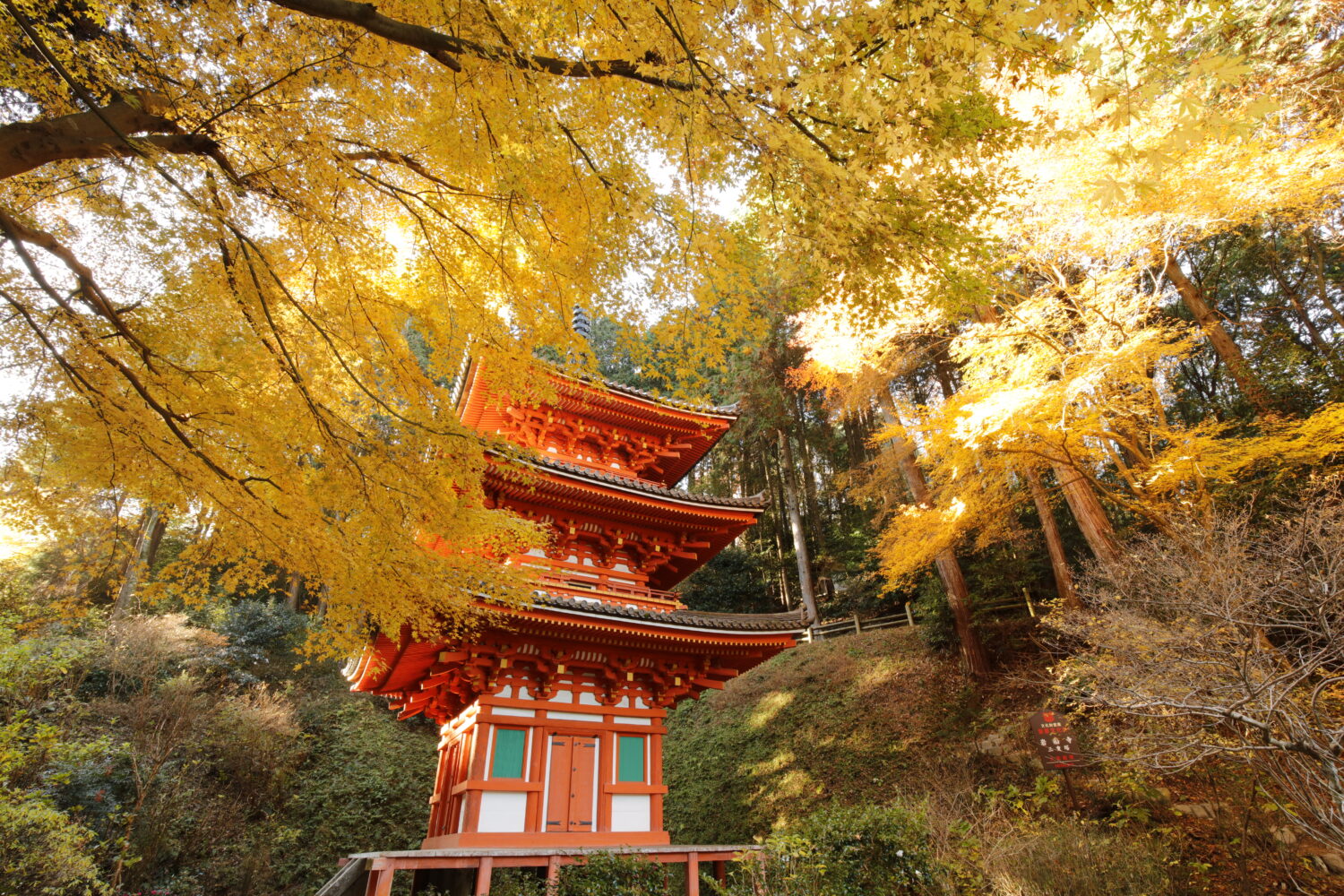 Gansen-ji Temple is an ancient temple nestled in a peaceful setting, surrounded by lush greenery. It houses a remarkable collection of Buddhist art and is also home to a three-storied pagoda built during the Muromachi period. The pagoda has been designated as an Important Cultural Property of Japan.
Viewed through the temple gate, the approximately 18-meter-tall pagoda is framed by brilliant autumn foliage, creating a scene of remarkable beauty, much like a painting. Here, visitors can fully appreciate the tranquil charm of autumn at an ancient temple nestled among the mountains.
6. Mie Prefecture: Yunoyama Onsen Circular Trail – Approx. 1.5 km
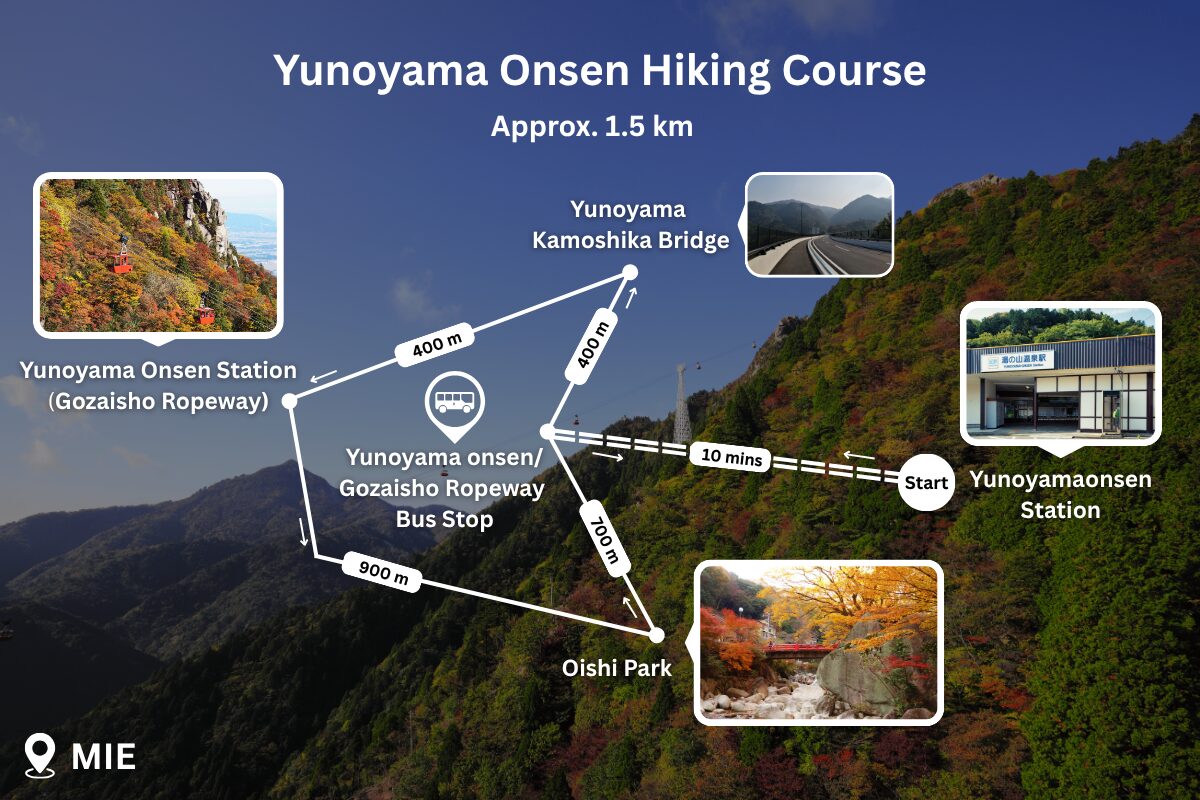 Starting Point: Yunoyama-Onsen Station (approx. 10-minute bus ride) —- Yunoyama Onsen / Gozaisho Ropeway Bus Stop (approx. 400 m walk) —- Yunoyama Kamoshika Ohashi Bridge (approx. 400 m walk) —- Yunoyama Onsen / Gozaisho Ropeway Station (approx. 900 m walk) —- Oishi Park (approx. 700 m walk) —- Yunoyama Onsen / Gozaisho Ropeway Bus Stop (approx. 10-minute bus ride) —- Yunoyama-Onsen Station
-
- Introducing the Yunoyama Onsen Circular Trail
The Yunoyama Onsen Circular Trail is approximately 1.5 kilometers long. It is one of the hiking trails where you can enjoy the scenery of Japan’s autumn foliage without having to cover a long distance. If you have some extra time, consider taking the Gozaisho Ropeway to the summit to admire the breathtaking mountain scenery from above.
-
- Highlights
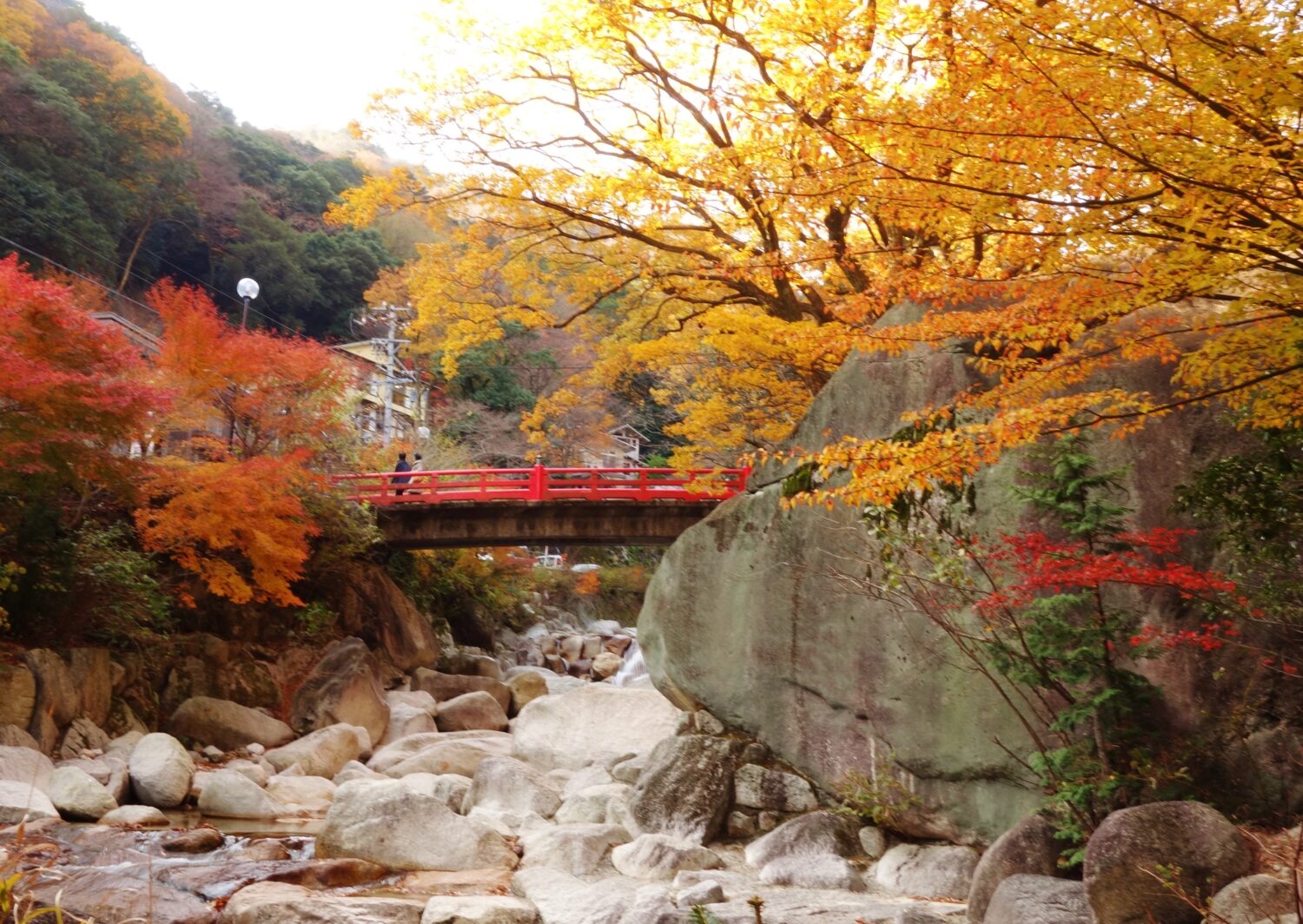 Oishi Park is located in the upper reaches of the Yunoyama Onsen area. It is a popular photography spot where visitors can enjoy a glimpse of traditional Japanese scenery. The striking contrast between the white granite rocks, vibrant autumn foliage, and a red bridge is particularly beautiful, creating a picturesque landscape with a timeless, nostalgic atmosphere.
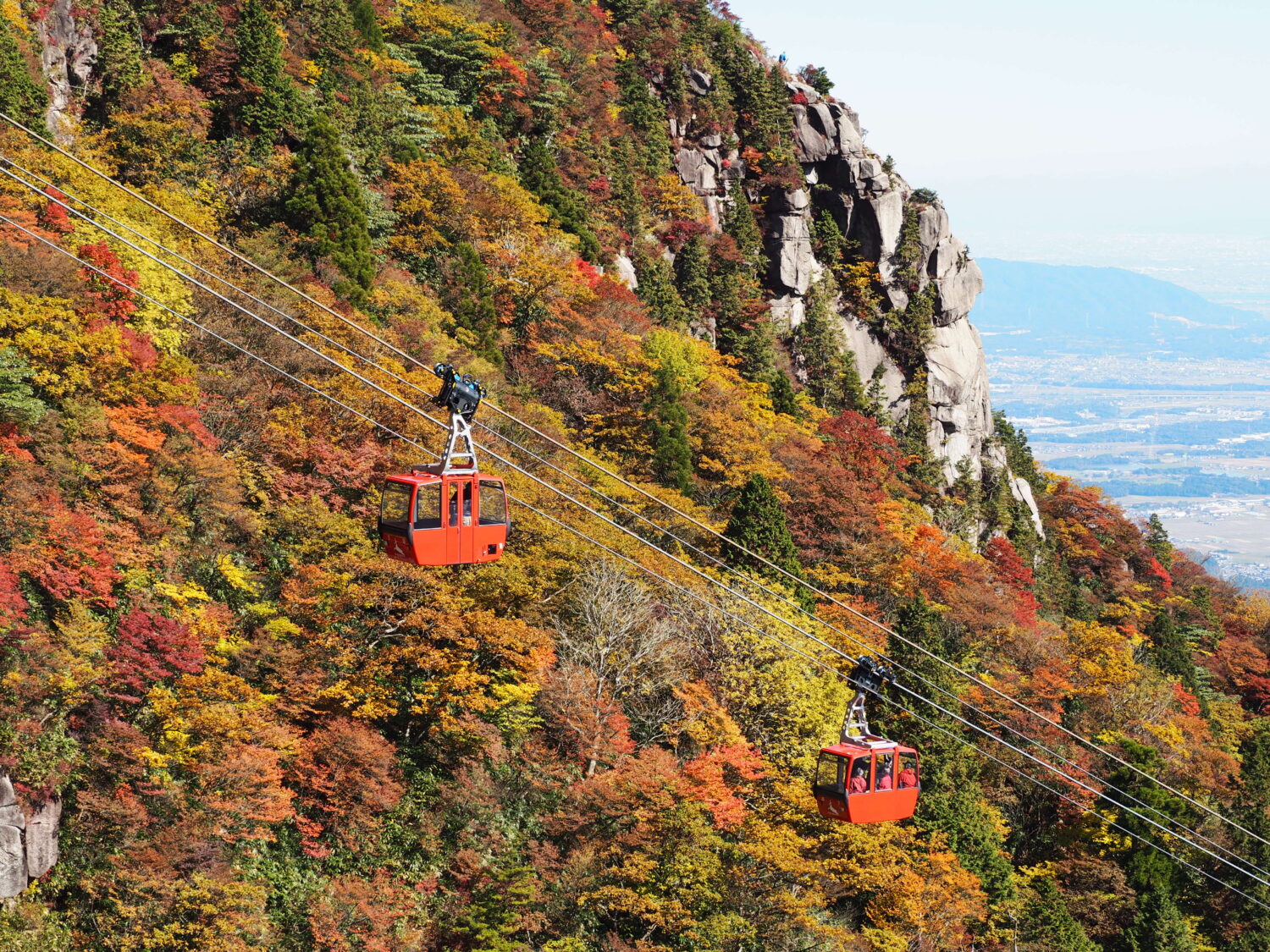 The Gozaisho Ropeway connects the foot of Mount Gozaisho with its upper slopes. One of its greatest attractions is the opportunity to watch the trees covering the mountainside gradually change color as you glide through the air. From above, you can take in sweeping views of the mountainsides beautifully transformed by autumn foliage.
7. Mie Prefecture: Akame 48 Waterfalls Trail – Approx. 9 km
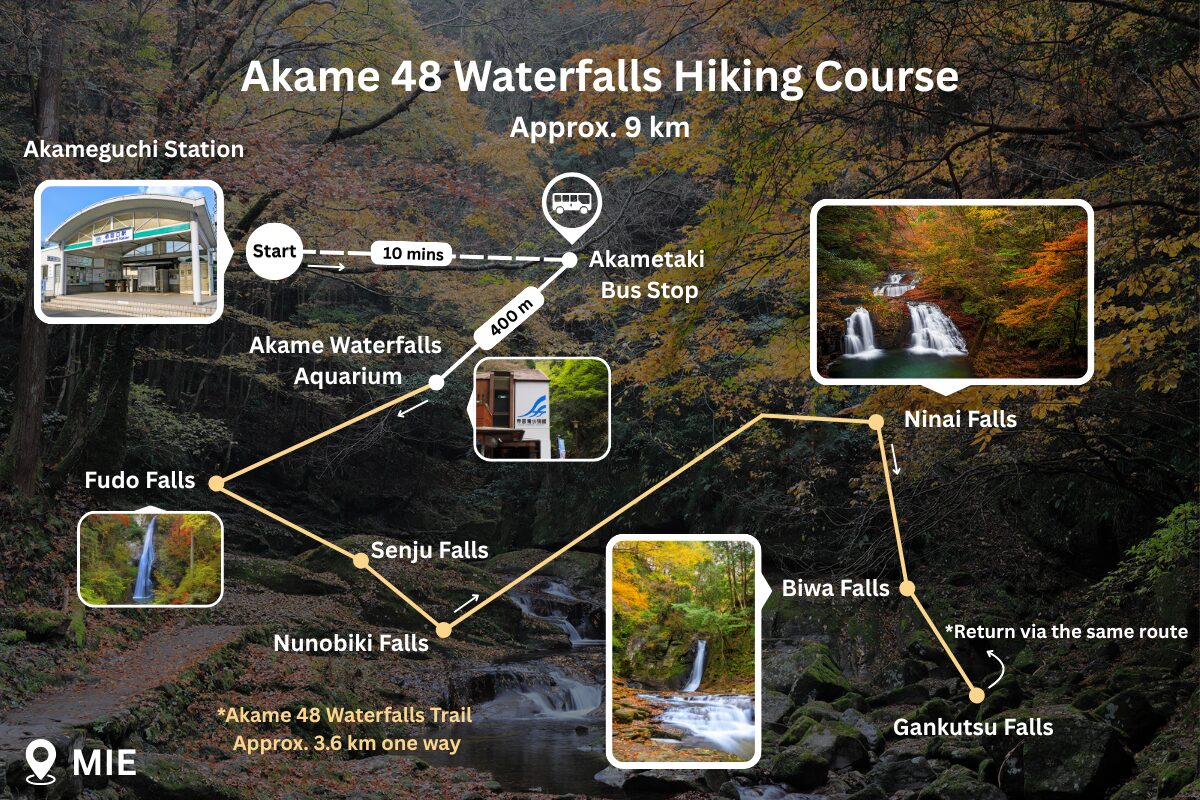
Starting Point: Akameguchi Station (approx. 10-minute bus ride) —- Akame Falls Bus Stop (approx. 400 m walk) —- Akame Falls Aquarium (approx. 200 m walk) —- Akame 48 Waterfalls Walking Trail —- Fudo Falls —- Senju Falls —- Nunobiki Falls —- Namban Falls —- Biwa Falls —- Iwakutsu Falls, The one-way trail is approximately 3.6 km long, and visitors return along the same route.
-
- Introducing the Akame 48 Waterfalls Trail
The Akame 48 Waterfalls Trail is approximately 9 kilometers long. Along the roughly 4 km walking path that winds deep into the valley, you will encounter a series of waterfalls of various sizes, including five of the area’s most famous falls, collectively known as the “Akame Gobaaku,” or the Five Great Waterfalls of Akame.
Once you reach Iwakutsu Falls, the deepest point of the trail, simply retrace your steps along the same path. One of the highlights of these hiking trails is that both the outward and return journeys offer wonderful opportunities to admire Japan’s autumn foliage and the waterfalls that appear one after another along the valley.
-
- Highlights
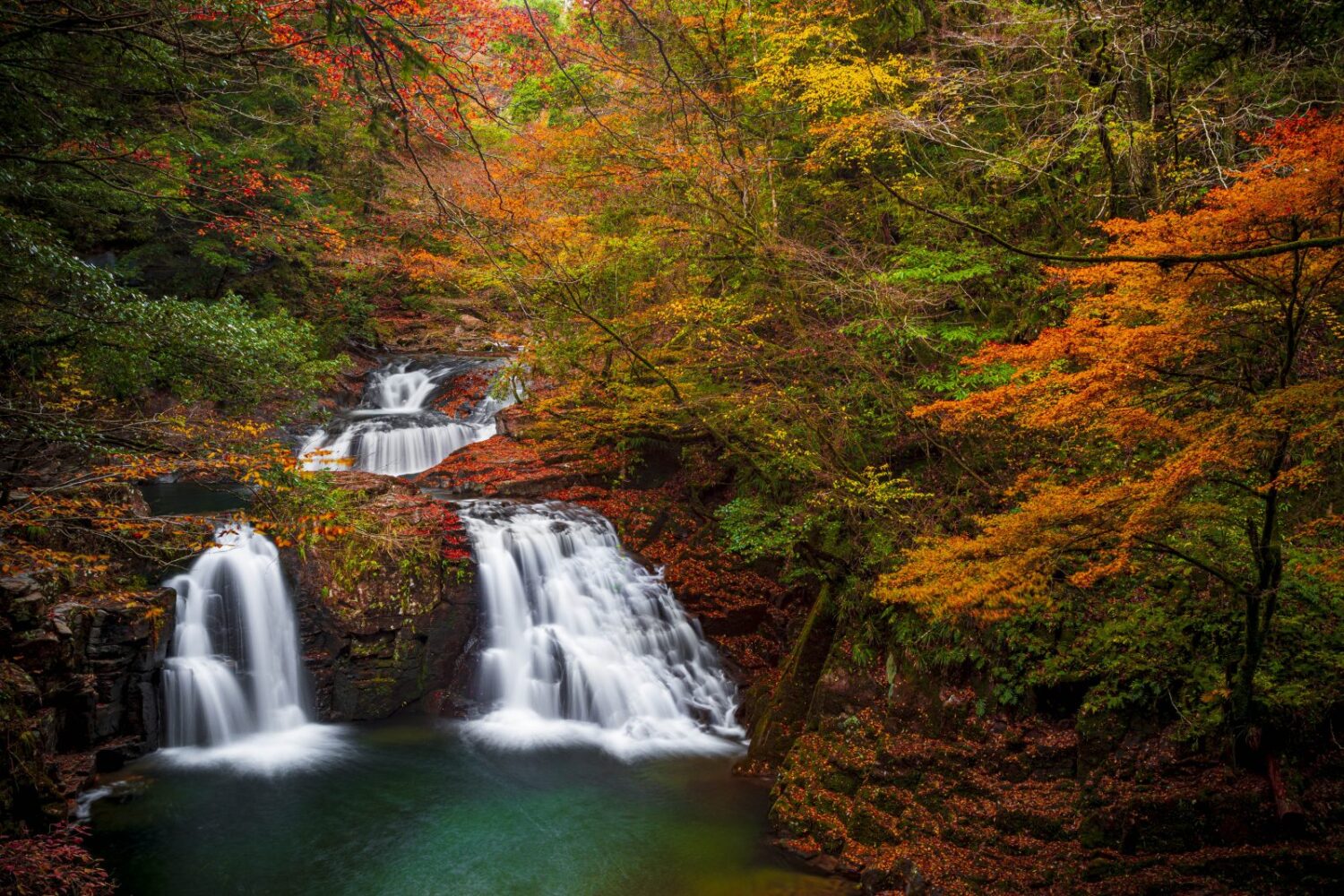 Namban Falls is a waterfall approximately 8 meters high. Its most distinctive feature is the large rock in the center, which divides the flowing water into two streams. It is said that the waterfall got its name because this formation resembles a person carrying a load on their shoulders.
From the viewing point directly in front of the falls, visitors can admire the plunge pool below and watch the water cascade down in a series of steps. With its beautiful natural scenery, this spot is regarded as one of the most spectacular highlights of the valley.
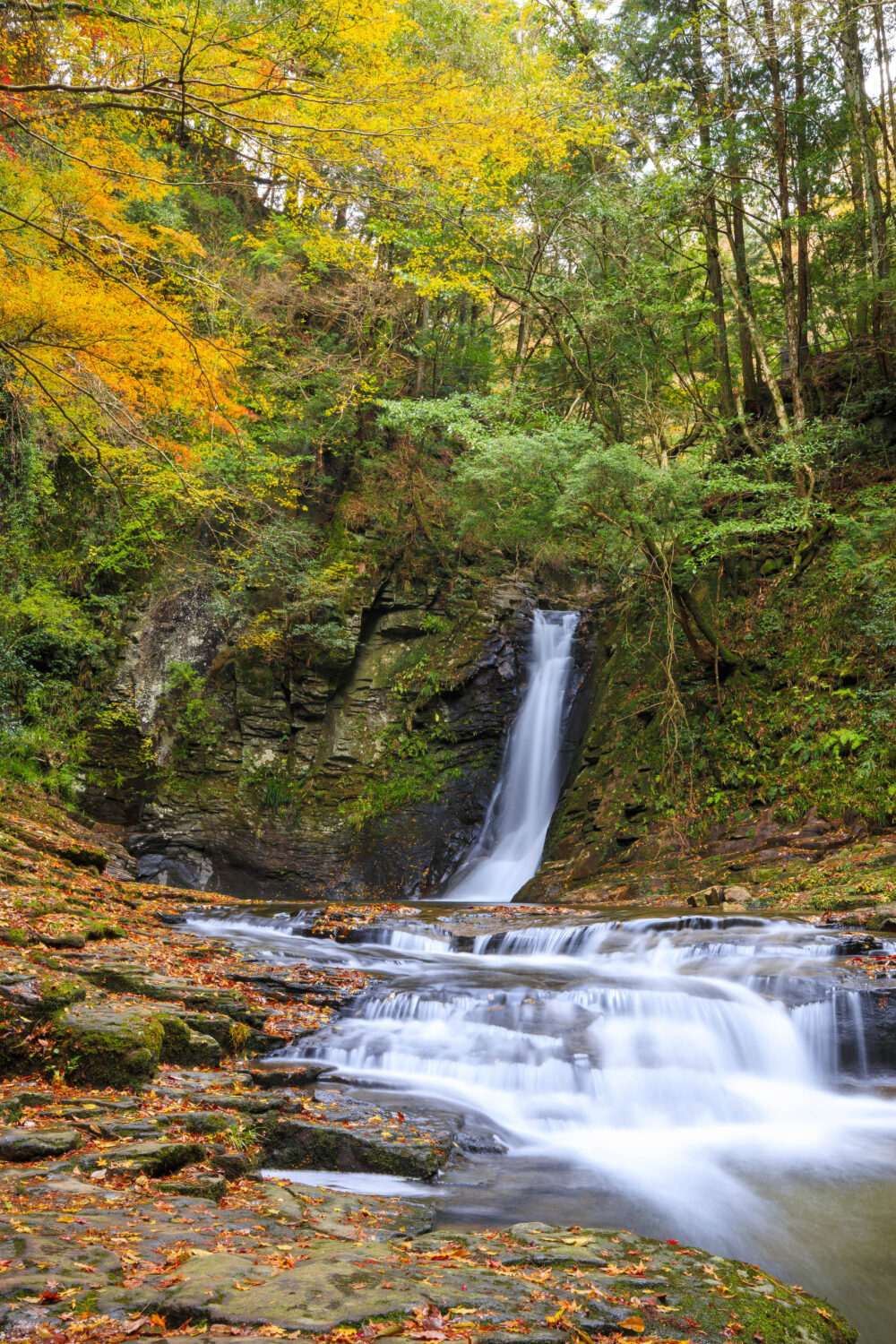 Biwa Falls is a waterfall approximately 15 meters high, surrounded by steep rock cliffs. Its plunge pool is said to be around 10 meters deep, and its striking emerald-green water makes it particularly captivating. The name “Biwa” is said to come from the resemblance between the graceful curves of the flowing water and the biwa, a traditional Japanese stringed instrument.
Source :
https://www.kintetsu.co.jp/foreign/english/
https://narashikanko.or.jp/en/
Read more articles
- Discover Asuka-Fujiwara, Japan’s New World Heritage Site and the Ancient Birthplace of Japan, Older Than Kyoto
- A recommendation for solo travelers! Come experience the charm of Japan’s lesser-known side in “Ishikiri” and “Ikoma”
- Enjoy breathtaking views of Ago Bay from ‘Yokoyama Observatory’, and we’ll recommend popular hiking trails in Ise-Shima National Park.
Recommended Links

ทุกเรื่องราวน่าสนใจเกี่ยวกับญี่ปุ่น เรารวบรวมไว้ที่นี่แล้ว! จะกิน เที่ยว ช้อป หาข่าว หรือหาข้อมูลต่างๆ เราจัดให้หมด เพจเฟซบุ๊กเราก็มีนะ เสิร์ชเลย > fromJapan.th ❤





Keep up with the latest trends, news, and fun activities. For more info, check out fromJapan page!